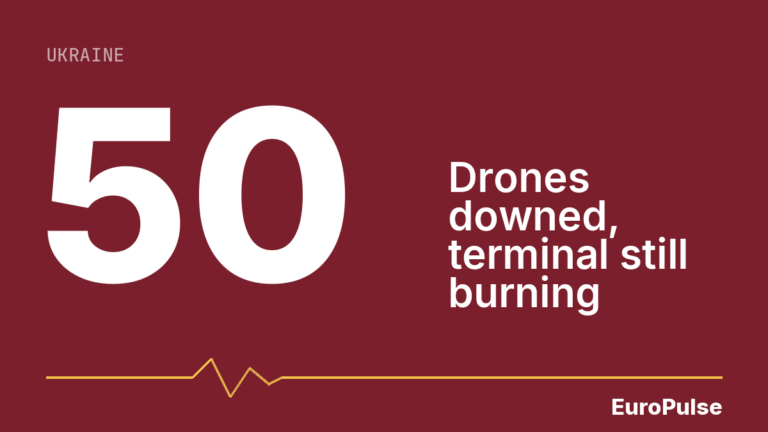
Overnight into 10 October, drones attacked the oil terminal of the company Yug Rusi in Rostov-on-Don and triggered a major fire. That is reported by the independent Russian outlet ASTRA, the Ukrainian news outlet Ukrainska Pravda and corroborating observer channels on Telegram. The governor of Rostov region, Yury Slyusar, confirmed the fire and said air defence had been deployed. Since the previous evening, more than 50 drones had been shot down.
According to ASTRA’s OSINT analyst, the burning facility is the Yug Rusi oil terminal in Rostov’s Zheleznodorozhny city district. The terminal handles the export of petroleum products, including deliveries from the Novoshakhtinsk refinery, which belongs to the Yug Rusi group of companies. According to Ukrainian sources, the facility is also involved in supplying fuel to the Russian military and generates foreign-currency revenue to finance the war against Ukraine. According to published specifications of the refinery, the terminal’s annual capacity is 3.5 million tonnes; Ukrainska Pravda cites a design capacity of about 2.5 million tonnes per year.
Videos on several Telegram channels showed large flames and thick smoke over the site. The observer channel Exilenova+ later reported that the terminal was still burning. The Kyiv Independent could not independently verify the footage and could not provide information on the extent of the damage. The Russian regional authorities confirmed only a fire and the deployment of air defence, but not damage to the terminal. There was initially no claim of responsibility by the Ukrainian military.
According to the governor of Rostov region, a railway bridge was also damaged by the drone attack. As a result, “rail traffic in both directions was halted”. ASTRA also reported damage to a residential building in the Rostov housing complex Donskaya Sloboda. It remained unclear what hit the building, while drone activity and Russian air defence continued.
Repeated attacks on the Novoshakhtinsk refinery
The attack on the terminal is part of a series of Ukrainian drone attacks on oil infrastructure in Rostov region. As early as 9 July 2026, the Ukrainian defence forces and the General Staff of the Armed Forces of Ukraine confirmed the successful drone damage to this oil terminal near Bataysk in Rostov region; at that time a fire broke out at the site. In September 2026, Ukrainian forces again attacked the production facilities of the Novoshakhtinsk oil refinery in Rostov region. On 25 September 2026, a Ukrainian attack on the Novoshakhtinsk refinery also triggered a fire, according to the General Staff.
In recent months, Ukraine has repeatedly attacked Russian refineries, depots and fuel infrastructure in order to disrupt supplies to the Russian military and reduce Moscow’s energy revenues. US President Donald Trump called on Ukraine to stop attacks on Russian oil facilities, saying they contributed to rising global diesel prices. Ukrainian President Volodymyr Zelenskyy stated that Ukraine was ready to stop attacking Russian energy facilities if Moscow in return halted its attacks on Ukrainian energy infrastructure. Such a stop would have to be mutual.
The attack on Rostov-on-Don came one day after Russian glide bombs hit residential areas in Zaporizhzhia on 9 October. According to Ukrainian prosecutors, one person was killed and nine others injured, including a 14-year-old girl.
What this means for people in Germany
Attacks on Russian oil infrastructure can influence global fuel prices. Rising diesel prices also affect German consumers, for example at the petrol station or in supply chains. Whether the latest attacks will actually lead to price increases cannot be proven on the basis of the available sources.
Editor’s note: This reporting is based on information from Ukrainian and independent Russian media as well as the governor of Rostov region. An independent verification of the information was not possible. The exact damage and responsibility for the attack have not been conclusively clarified.