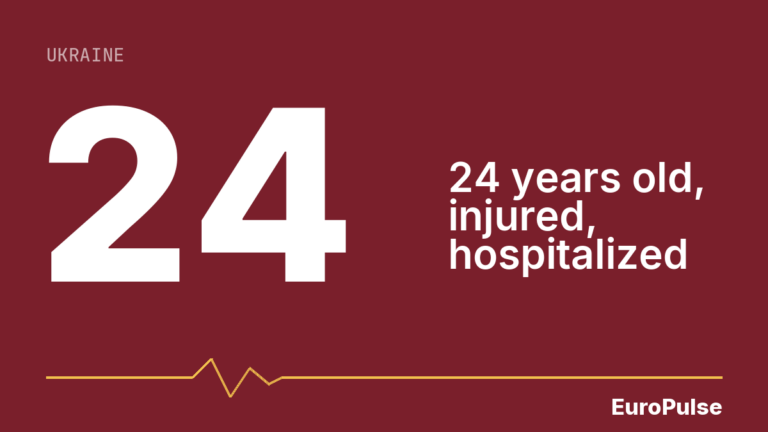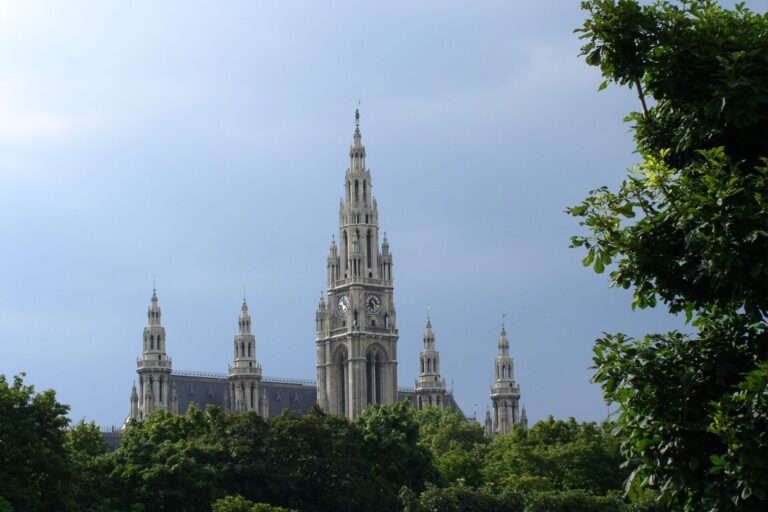
Mykhailo Tkach, head of investigations at Ukrainska Pravda, was released in Vienna at about 4 a.m. on Friday after more than 12 hours in police custody. His cameraman, Yaroslav Bondarenko, was injured during the detention and taken to hospital. The two had been in Austria trying to locate Ruslan Kravchenko, Ukraine’s former prosecutor general, who left the country in mid-September and has not returned.
Why Austrian police stepped in has not been made public. Editor-in-chief Sevgil Musaieva said the accusations were unlike anything her newsroom had faced and that the journalists’ procedural status was unknown. Tkach’s phone and equipment were initially not returned. Foreign Ministry spokesman Heorhii Tykhyi said the embassy had asked Austria to explain the circumstances and that a consul had spoken to Tkach. The reports available so far contain no statement from Austrian authorities (as of midday, 9 October).
From a raid to a flight
The backstory is short but dense. On 4 September, the National Anti-Corruption Bureau (NABU) announced an operation against a criminal organisation allegedly led by a Prosecutor General’s Office employee, Serhiy Kropyva. He is suspected of “shielding” illegal call centres and laundering assets worth more than UAH 89 million. NABU detectives searched Prosecutor General’s Office premises overnight into 5 September. A court remanded Kropyva in custody with bail set at UAH 120 million (about $2.7 million). According to NABU and media reports, wiretaps referred to him as “Chancellor”, and investigators consider it likely that he enjoyed the prosecutor general’s protection.
Kravchenko denies this. The allegations are “completely unsupported by evidence”, he said on 6 September, and a published photo of a safe full of cash was “mere gossip”. The Prosecutor General’s Office itself noted that the search warrant contained no evidence that he protected call centres or leaked raid plans. The presumption of innocence applies to everyone involved.
Kravchenko submitted his resignation on 7 September and left Ukraine on 14 September. Officially it was a business trip; the Kyiv Independent reports it was to a conference in Paris whose organisers say they did not expect him. Censor.net, citing sources, says the trip was registered as a visit to Brussels. On the same day he signed notices of suspicion against NABU director Semen Kryvonos and a person close to the head of the Specialised Anti-Corruption Prosecutor’s Office (SAPO); the Prosecutor General’s Office cancelled them overnight. He was dismissed on 15 September (Censor.net cites a presidential decree, the Kyiv Independent a parliamentary decision), and on 17 September Volodymyr Zelensky named Anton Kovalsky acting prosecutor general.
In late September Ukrainska Pravda, in an investigation by Tkach, reported that Kravchenko and his wife are registered in Vienna at the address of a company that supplies registered business addresses. Whether he actually lives there is unconfirmed: according to TSN, an activist who visited found nobody home.
Clearing house in Kyiv
On Friday Kovalsky announced on Facebook that seven people mentioned in connection with Operation Carthage have been dismissed from the Prosecutor General’s Office, eight across the prosecution service as a whole. An internal inquiry is examining how Kravchenko left the country, and 24 prosecutors have taken polygraph tests. “The investigation must provide answers to all questions,” Kovalsky wrote, adding that he would not draw conclusions in advance.
For Ukraine’s EU bid this is more than domestic politics. The independence of NABU and SAPO has long been a litmus test for reform in Brussels; in summer 2025 a law curbing both bodies had to be reversed after protests and European criticism. That the country’s top prosecutor signed suspicions against the NABU chief on the day he left is unlikely to be read there as a footnote.
What happens next is our assessment, with caution: extradition would be slow. TSN reports that Austrian courts grant about 6% of requests and that Vienna has refused 26 of 27 Ukrainian extradition requests since the full-scale invasion; the process can take years. In the near term the key question is whether Kyiv formally names Kravchenko a suspect, for instance over the business-trip paperwork. And Vienna will have to explain why two reporters working on a story about a man in Austria were held for over 12 hours. The longer the answer takes, the more this becomes a press-freedom question in an EU member state.
Sources: Ukrinform (Kovalsky statement), OBOZ.UA (Ukraine’s Foreign Ministry), ZMINA, Kyiv Independent, New Voice of Ukraine, TSN