Democracy can sometimes unfold in fast-forward. Thirty-six years ago, on March 18, 1990, citizens of the German Democratic Republic (GDR) voted for their representatives in the first—and last—free and secret election in East German history. The 409 members of the 10th People’s Chamber had just seven months to transform an authoritarian state into a democracy and prepare for German reunification.
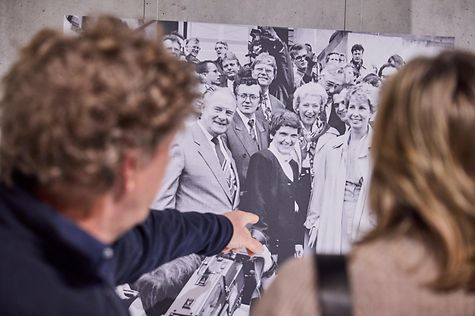
This historic achievement is now being honored in an exhibition at the German Bundestag. Titled ‘The People Have Become Aware of Themselves,’ it documents, through photographs and original documents in the Marie-Elisabeth-Lüders-Haus, that intense period between the election and the formal unification on October 3, 1990.
Bundestag Vice President Bodo Ramelow (The Left) described the election at the opening as an ‘act of self-empowerment.’ The exhibition is part of the ‘Day of Democratic History 2026,’ under the patronage of Federal President Frank-Walter Steinmeier. March 18 symbolizes, like few other dates, Germany’s long road to democracy—from the Mainz Republic of 1793 and the Revolution of 1848 to that pivotal moment in 1990.
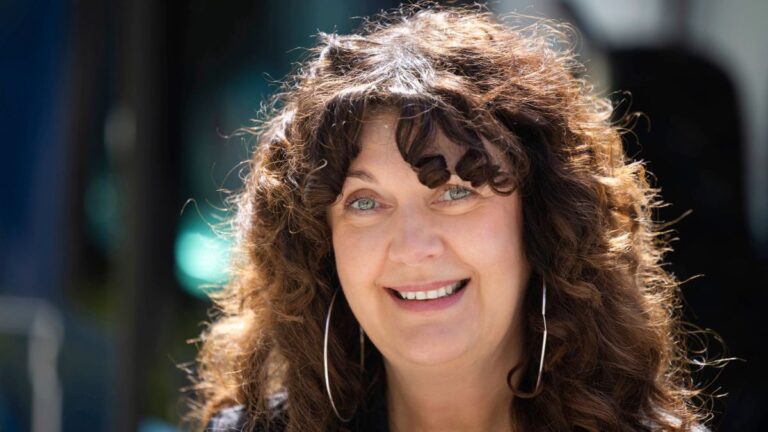
At the helm of this historic parliament was Dr. Sabine Bergmann-Pohl (CDU), the first woman to serve as president of an East German parliament. ‘Parliaments should shape the future, not just the government,’ she demanded in the very first session—a principle that defined their work.
‘For me, it was the most exciting time of my life,’ Bergmann-Pohl recalled at the exhibition opening. ‘It was the most exhausting time of my life, but also the happiest, because reunification was being shaped.’
The numbers underscore the incredible pace: In just 180 days, the People’s Chamber passed 93 resolutions, 164 laws, and concluded three state treaties. It was a phase in which democracy was literally reinvented and lived—under constant time pressure.
The exhibition, open until December 31, 2026, serves as a prelude to several Bundestag events for the Day of Democratic History. In a panel discussion, Bergmann-Pohl was joined by former People’s Chamber members Dr. Gregor Gysi (The Left) and Markus Meckel (SPD) to reflect on this formative era.
It serves as a reminder that democratic achievements are not a given; they often must be fought for and shaped in short, intense moments. At a time when democracies worldwide are under pressure, this look back at Germany’s recent history gains particular relevance.
The people have become aware of themselves. The 10th People's Chamber of the GDR
Arbeits