Key date in German history
Klöckner — Deutscher Bundestag
March 18: A Day for Democracy History
Bundestag President Julia Klöckner has honored March 18 as a central date in German democratic history. On this day, the official Day of Democratic History will be celebrated for the first time.
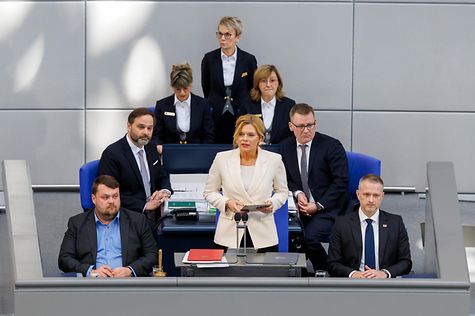
March 18th is no ordinary calendar day in Germany. Bundestag President Julia Klöckner described it at the start of the plenary session on Wednesday as a “key date in German history.” She honors a date that is now being observed for the first time as an official Day of Democratic History—under the patronage of Federal President Frank-Walter Steinmeier.
“It is astonishing that we are only today celebrating the Day of Democratic History for the first time on this date,” Klöckner said, according to the minutes of the German Bundestag. March 18th stands “for courage, for the desire for freedom, and for the long path toward a democratic order.”
The historical depth of this date is impressive. On March 18, 1793, the first republic on German soil was proclaimed in Mainz. Fifty-five years later, people in Berlin fought on the barricades for fundamental rights that seem self-evident today. On March 18, 1920, the Weimar National Assembly met in Stuttgart—the parliament had relocated there during the Kapp Putsch, when anti-republican forces sought to overthrow the young democracy.
But perhaps the most defining event for the living generation is March 18, 1990. On that day, the citizens of the GDR voted freely for the first time. The last election to the People’s Chamber, with a voter turnout of 93.4 percent, marked the transition from dictatorship to democracy. “These 93.4 percent were an expression of a longing for freedom,” emphasized the President of the Bundestag.
Klöckner drew a clear line through the centuries: On March 18, “people across generations stood up for freedom and for democracy.” Democracy does not live on consensus, but on the fact that “we tolerate differences, confront opposites, and ultimately come to decisions that everyone adheres to.”
In her speech, the President of the Bundestag also referred to current challenges. The example of Ukraine shows that democracy is not just a form of government for quiet times. Dissatisfaction belongs to democracy, criticism is its corrective. “Our decisions will remain controversial. That is not the problem of democracy; that is, in fact, its very essence,” said Klöckner.
The historical references make it clear: democratic achievements are never permanently secured. The Mainz Republic and the Revolution of 1848 did not end in the desired freedom. The triumph of democracy in 1920 was not lasting. Yet the idea of freedom has survived and has been “more persistent than its opponents.” With the first Day of Democratic History, Germany now has a fixed anchor point for remembering this long journey. The message of this day, as Klöckner concluded to applause: “Long live our freedom, long live our rule of law, long live our democracy.”