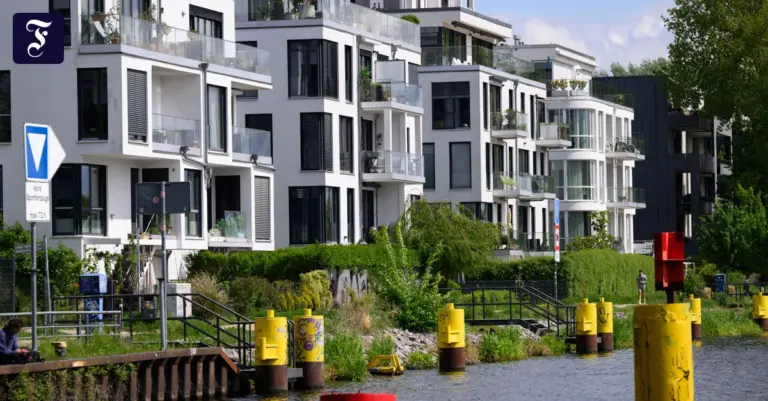
The Left party’s current proposals to expropriate around 220,000 apartments and introduce a rent cap are not the answer to Berlin’s housing crisis. Instead, the focus should be on building affordable housing to sustainably improve the situation.
The state of the German real estate market is alarming. In cities, there are hundreds of applicants for every vacant rental apartment. Only six percent of households with tenants aged 30 to 44 have the necessary equity to buy a property. These figures highlight the urgency of the situation.
The causes of the housing shortage are complex. The population in cities is growing while it declines in rural areas. This creates a paradox: oversupply in the countryside and a shortage in urban centers. Additionally, households are getting smaller, which has created nearly six million additional households since 1992.
Construction numbers are alarming. In 2023, housing construction fell by 30 percent. With only 206,600 completed apartments, the weakest figure since 2012 was recorded. This is particularly concerning because construction costs have more than doubled since 2010, reaching over 5,400 euros per square meter.
The rent brake has proven ineffective and is causing landlords to move into niche markets or exit the market entirely. A loss of just one percent of the rental stock means 200,000 apartments are missing – equivalent to an entire year of new construction.
Against this backdrop, rent caps and expropriation are not solutions but exacerbate the problems. The rent cap merely redistributes scarcity: those who already have an apartment benefit from lower rents, while finding an apartment becomes a lottery for others.
The planned expropriation of Vonovia could cost Berlin up to 36 billion euros in compensation. That money could build numerous new apartments. Moreover, such a measure would deter potential investors and banks, as compensation is set at only 40 to 60 percent of the market value of the properties.
The real solution lies in building more cheaply rather than granting expensive subsidies. The planned building type E must reduce excessive standards. Quotas for price-controlled apartments in new construction projects should be lowered, and first-time buyers should be exempt from property transfer tax.
Additionally, there is untapped potential in existing buildings, such as adding floors and subdividing large single-family homes, which can only be realized if renting becomes profitable again. One can only hope that this perspective gains traction in Berlin and breathes new life into the German real estate market.
If the Left party prevails with its plans, the consequences could be far-reaching and negative.
Source: www.faz.net