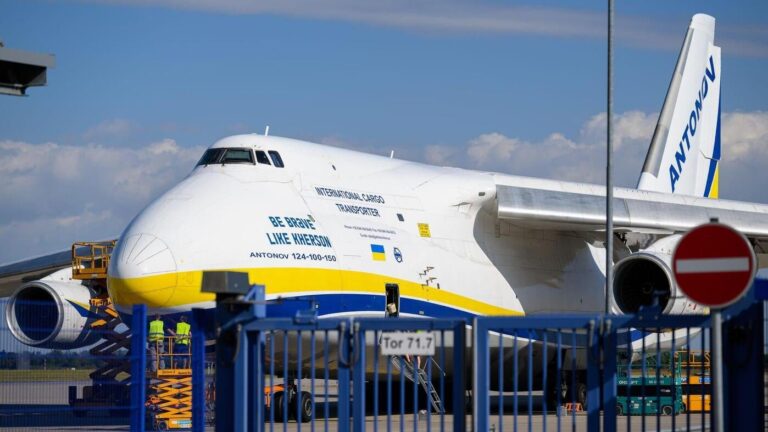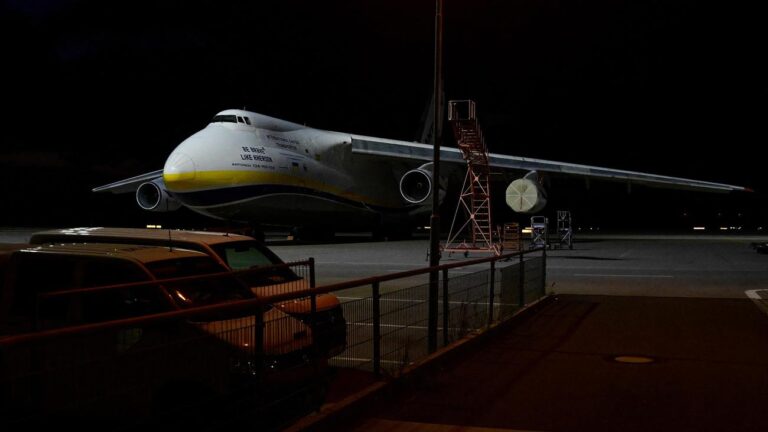
The analysis by Die Zeit traces how the Kremlin has rhetorically escalated its stance toward Europe for years and now appears to back it up with hybrid means. Specifically, the article cites threat lists against drone factories, alleged assassination plots against managers, agents arrested at the border, and the attempted attack on a Ukrainian Antonov in Halle-Leipzig. For the authors, these incidents are not isolated cases but part of a systematic strategy.
Behind the actions is not just a policy of intimidation for domestic and European audiences, but a sober military calculation. Europe has become the secure hinterland of Ukraine’s war logistics, which Moscow cannot hit with missiles. That is why Russia is working this zone with sabotage, espionage, and terror—a form of warfare that remains below the threshold of an open military attack.
The Kremlin’s Rhetoric
Two years ago, Putin officially declared the West a warring party in his campaign of conquest against Ukraine. Spokesman Dmitry Peskov repeated this line just a few weeks ago, explicitly naming Berlin, Paris, The Hague, and Washington D.C. as adversaries behind Kyiv. Foreign Minister Sergey Lavrov reaffirmed in June that NATO and the European Union (EU) are directly involved in the war.
These statements are not mere propaganda slogans but prepare the population for a longer confrontation. By labeling the West a warring party, the Kremlin creates the basis for further aggressive measures—both domestically and against European targets. The analysis emphasizes that this rhetoric does not remain without consequences but is meant to legitimize real operations.
The Failure of Appeasement
The text also dismantles the old Western hope of appeasing Putin through cautious calibration. The restraint on Taurus deliveries, the hesitation in support, and semantic pirouettes around the word “warring party” have, in hindsight, looked like security-policy theater with a thin script. This strategy neither deterred Putin nor increased European security.
Instead, developments show that Russia interprets any restraint as weakness and expands its hybrid attacks. The arrests of agents and the sabotage attempts prove that the Kremlin has long been in attack mode—regardless of how Berlin packages its support for Ukraine diplomatically. In Putin’s worldview, only factual support for Kyiv counts, not the choice of words.
The Price of Support
In the end, the uncomfortable punchline remains: Whoever effectively supports Ukraine pays a real risk premium. The analysis makes clear that Europe must prepare for Russia to further intensify its hybrid attacks—precisely because conventional means
Source: www.zeit.de