Nothing is official. Yet much suggests the German government is about to block the Chinese state-owned shipping group Cosco from taking over the Hamburg haulier Konrad Zippel. “Cosco barred from buying” would be too tidy a description: no prohibition has been announced or confirmed.
Cosco wants 80 per cent of Zippel, a Hamburg company of about 350 staff that moves containers inland from the ports of Hamburg and Bremerhaven by truck, rail and barge. The Federal Cartel Office cleared the deal on 20 February. Its president, Andreas Mundt, said there were no competition concerns: Cosco operates at sea, Zippel on land, and they are not direct rivals. Security questions, the office stressed, are not part of its review.
That is where the Federal Economics Ministry comes in. It examines the purchase under the Foreign Trade Act and Ordinance; for investors from outside the EU and EEA, scrutiny can apply from 25 per cent of voting rights, and from 10 or 20 per cent in security-relevant sectors. According to Handelsblatt reporting picked up by Verkehrsrundschau on 29 September, the government is heading for a no. Industriemagazin reports that the economics, foreign, defence, interior and finance ministries all oppose the majority takeover. Internal papers reportedly warn of strategic dependencies that could be used against Germany in political crises; the domestic intelligence service had already voiced reservations in spring.
Why a haulage firm?
Because logistics is more than lorries. Whoever controls the routes from port to hinterland sees goods flows, timetables and customer data. According to media reports, the intelligence service warned of a creeping expansion of Chinese influence in Europe’s logistics chains, of “cumulative acquisitions” along the transport chain. Green MPs asked in a parliamentary question about access to transport infrastructure, sensitive data flows and logistics routes.
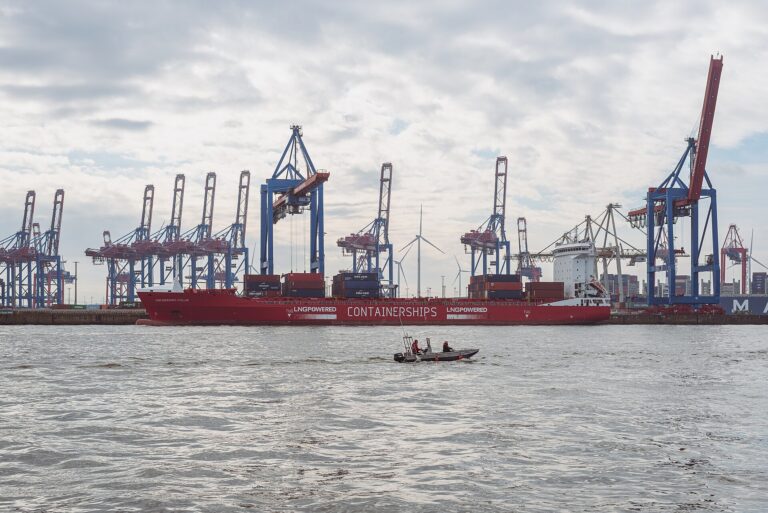
Cosco is no stranger to Hamburg. Since 2023 Cosco Shipping Ports has held 24.99 per cent of the Tollerort container terminal; more was originally planned, but after the political row it stayed a minority stake. Buying Zippel would extend the group from the quayside into the countryside. For those who favour approval, and there are some in business and the port industry, this is an ordinary deal for a shipping line; for opponents it is precisely the scenario security services warn about.
Zippel, according to Verkehrsrundschau, confirmed it had noted the government’s decision; business continues unchanged, and Cosco is the applicant in the procedure. Cosco declined to comment, and the ministry did not comment on the reports.
The sequence so far: cartel clearance in February, first reports of intelligence-service reservations at the end of April, and the report on the government’s stance at the end of September. Notably, the screening has run for more than half a year without the ministry saying anything in public. The media rely on government circles and internal papers, which is why the reports must stay conditional and why we relay them that way.
What follows?
Our assessment, with moderate confidence: if five ministries oppose the deal, a prohibition or a withdrawn application is more likely than approval with conditions. Cosco could challenge a ruling in court, and the outcome would be open. More important than the single case is the signal: after the Tollerort dispute, Berlin is looking at how several holdings along one supply chain add up, not just at the individual deal. For Zippel a no mainly means uncertainty over its future owner; the 350 jobs are not immediately affected, the company says. Whether the ministry will formally explain and publish its decision is not yet known.
Sources: Verkehrsrundschau, Industriemagazin, trans.iNFO (цитата Bundeskartellamt)