Federal Chancellor Friedrich Merz (CDU) wants to cut the electricity tax for all households to the European minimum. He announced this on Monday after a two-day closed meeting of the CDU presidium in Berlin. “We have to work our way out of a low, including out of a crisis of confidence,” Merz said, according to ZDFheute. After the recent election defeats, the CDU must again focus more strongly on people’s problems: affordable living, more fairness and more security were the decisive issues.
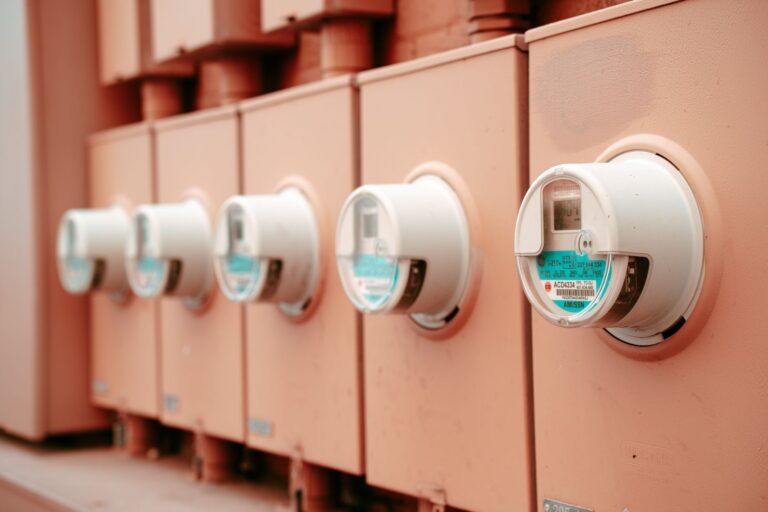
Until now, the electricity tax had only been cut for certain economic sectors, in particular for companies and for agriculture and forestry. A cut for everyone had been agreed in the coalition agreement, but had not been implemented, with reference to a lack of financial leeway. “We do not only want to make relief possible, we also want to close the credibility gap that arose for all of us from this decision last year,” Merz said, according to WirtschaftsWoche. For an average household, the electricity tax currently amounts to around 80 euros per year, as MDR reports.
How large the relief for individual households should be, when it will take concrete effect and how it will be financed is still open. Merz pointed to leeway in the budget that could exist “if growth consolidates and becomes sustained”. The forecast for economic growth had been raised from 0.5 per cent to 1.3 per cent for this year and to 1.1 per cent for next year. One per cent of growth in Germany corresponds to around ten billion euros in additional tax revenue, five billion of that at federal level. “That is exactly the one per cent of growth that gives us this leeway,” said Merz.
Election defeats and loss of trust
The closed meeting had been scheduled after the CDU’s heavy defeats in the September state elections. In Mecklenburg-Vorpommern, the CDU failed to enter a state parliament for the first time in its history. In Berlin, it was pushed out of first place by the Left, and in Saxony-Anhalt it lost almost 20 percentage points. In several polls, the Union is below 20 per cent 17 months after the swearing-in of the black-red government – in the federal election at the beginning of 2025 it was 28.5 per cent.
The presidium adopted a six-page declaration entitled “What must happen now”. It states: “The recent election results were a clear warning signal for the Union. Germany expects us to change something. We accept this mandate. Not with personnel debates, but with consistent policy.” Merz said the CDU – and he did not exclude himself – had failed to combine the federal government’s reform efforts with a positive future perspective for large parts of the population. CDU General Secretary Franziska Hoppermann had stressed at the start of the closed meeting that the deliberations were not a “miracle weapon” but the beginning of a longer-term process.
In addition to the electricity tax cut, the declaration contains further points: on housing, unnecessary construction requirements must go, “instead of expropriating”. In order to secure domestic German air traffic, the federal government should cut air traffic control fees at short notice. Specialist doctor appointments must be accessible regardless of insurance status. Care periods by relatives should continue to count towards the pension without increasing the municipal deficit. Insured persons needed support when changing jobs, and further training must become more flexible. “We tolerate no no-go areas and places of fear in our cities,” it says on security.
Bärbel Bas’s resignation overshadows the situation
The political situation gains additional explosiveness from the resignation of Bärbel Bas. On Monday morning, the SPD politician gave up both her office as Federal Minister for Labour and Social Affairs and her co-chairmanship of her party with immediate effect. She cited mourning for her deceased stepdaughter as well as ongoing attacks from the Union. Merz thanked Bas for her work in the cabinet: “I regret her personal decision, but of course I respect it,” he said, according to Spiegel. “I can imagine what a difficult time she is going through.” He had demanded Christian consideration from his party and offered Bas to take all the time she needed. “We have had differences on the substance, but I can say for my part that I have always discussed with her only on substantive issues – never personally.”
Merz announced that he would ask Federal President Frank-Walter Steinmeier to appoint Alexander Schweitzer, proposed by the SPD, as Bas’s successor in the Labour Ministry. The resignation hits the coalition at a stage when important reform projects are pending – including changes to pensions and the labour market. A change of personnel alone did not call the basis of cooperation into question, said Merz. However, the political tensions between the Union and the SPD are unlikely to make the negotiations easier.
Merz also commented on the exploratory talks in Berlin and called on the SPD and the Greens not to enter into a coalition with the Left. There was a majority together with the CDU in the House of Representatives, he said, with a view to the SPD and the Greens. On the planned tax reform, which is already before the Bundestag, Merz said: “We are not blowing anything off now.”
With the announced electricity tax cut, the Chancellor is trying to demonstrate economic policy capability and regain lost trust. Whether that succeeds depends on whether the coalition can reconcile the financial promises with a viable budget – and whether the relief reaches people.