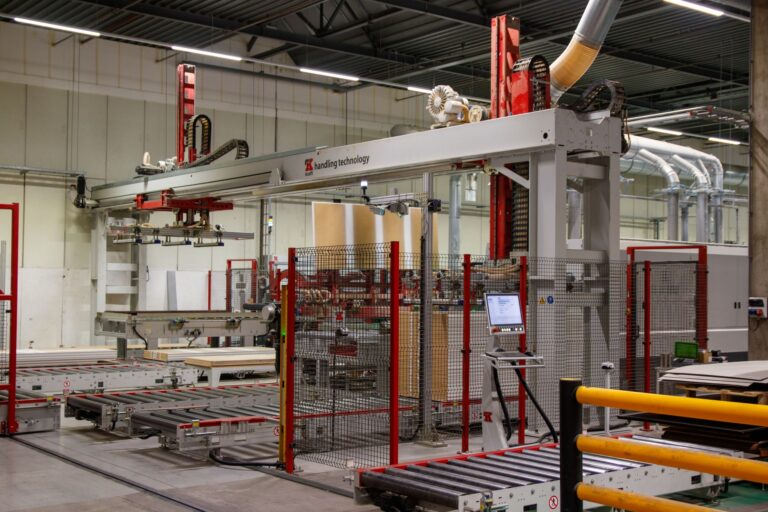
Germany’s federal government signed a letter of intent with US chipmaker Nvidia on Monday, at the opening of the “Invest in Germany” summit in Berlin. According to government information relayed by AFP, the economy and research ministries are behind the document. It centres on “Physical AI”: artificial intelligence for machines that act in the real world, such as robots, vehicles and connected factories.
The two sides agreed to develop specialised, open AI models for industry, drawing on German industrial data, manufacturing know-how and engineering. Nvidia is to expand its work with German partners so that mid-sized firms, the Mittelstand, also benefit. The plan forms part of the government’s AI roadmap, with the Plattform Industrie 4.0 as the central network, open to all companies.
What the declaration leaves out: money, projects, timeline
Before the summit, Handelsblatt reported that Berlin was prepared to commit a three-digit million-euro sum, probably from the Hightech-Agenda. The money would first rent computing capacity in Deutsche Telekom’s AI cloud, and about a dozen companies, including Siemens, Audi and Black Forest Labs, were said to want in. The announcement itself names no figure, and which concrete projects will follow remains open, according to the reports available.
That matters. A letter of intent binds hardly anyone legally and creates no budget line. Whether it turns into a funding programme will only be clear once a call for proposals or an item in the federal budget appears.
What is new is the focus. In June 2025 Chancellor Friedrich Merz met Nvidia chief Jensen Huang in Berlin, and the government announced an “Industrial AI Cloud” of at least 10,000 GPUs within nine months, complementing the EU’s AI gigafactories. That was about data centres; this is about the models that run on them.
“Just get to work”
Huang himself sharpened the tone. Speaking to journalists in London, he said, as reported by dpa: “Nothing hurts me more than seeing one of the most technologically advanced countries fall so far behind.” He suggested the cause might be “the European way of overthinking everything”, adding: “Germany has so much talent – just get to work.” He urged treating data as a national resource, used at home to build “national intelligence”, rather than handing over knowledge and importing the result later. By Nvidia’s own account, it invested almost one billion dollars in Germany last year.
Merz urged companies to open up their industrial data for AI applications and said Germany was acting from a position of strength despite geopolitical and economic challenges.
The question ZDFheute also raises remains: how sovereign is an AI strategy tied closely to a single US company? “Open” models are a counterweight, since in principle they can run on other hardware. In practice, dependence on Nvidia’s software ecosystem is likely to stay high. Meanwhile Chinese firms currently lead in humanoid robots, which explains the time pressure on German manufacturers.
Our assessment, with medium confidence: the benefit for the Mittelstand depends less on the declaration than on whether computing time and data access are actually made affordable. That is the yardstick for the partnership in the coming months.
Sources: Bundesregierung, Berliner Zeitung/AFP, Tagesspiegel/dpa, ZDFheute, Hasepost/dts