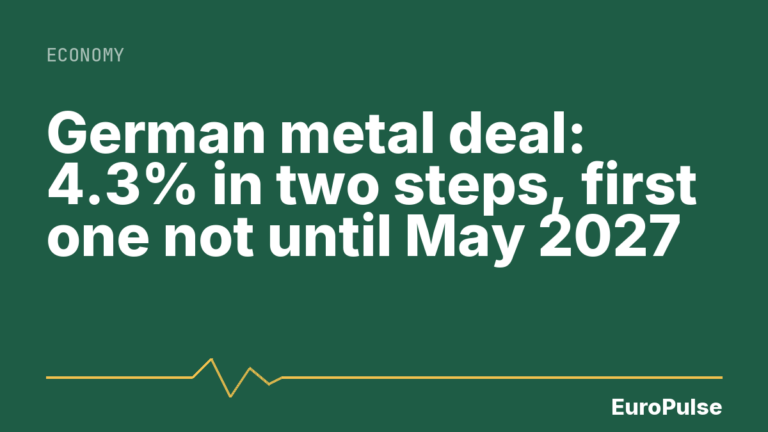
Status: evening of 26 November. After more than 26 hours of talks in Mannheim, IG Metall and the employers have agreed a pilot deal for Germany’s metal and electrical industry. Pay scales rise in two steps, by 2.0% from May 2027 and by 2.3% from April 2028, roughly 4.3% in total. A one-off payment of up to €450 follows in March 2027, and the deal runs for 25 months, to 30 November 2028. The negotiating regions, Baden-Württemberg and North Rhine-Westphalia, employ about 1.7 million people; if the result is adopted nationwide, it will cover around 3.7 million.
Compared with the 2024 round, the outcome is leaner:
| 2024 deal | 2026 deal | |
|---|---|---|
| First step | +2.0% from April 2025 | +2.0% from May 2027 |
| Second step | +3.1% from April 2026 | +2.3% from April 2028 |
| Sum of steps | 5.1% | 4.3% |
| One-off payment | €600 (February 2025) | up to €450 (March 2027) |
| Runs until | 31 Oct 2026 | 30 Nov 2028 |
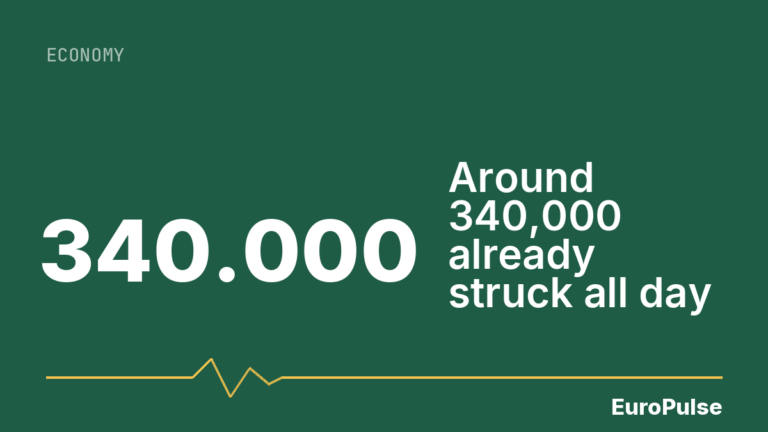
The one-off payment is tiered by company profitability: €300 where net return on sales is below 4.6%, and only €150 below 2.3%. Between the old contract expiring at the end of October and the first step in May 2027, scales stay flat. The union had backed its demand for higher pay with warning strikes joined by hundreds of thousands of workers.
The real fight was not about percentages
The heart of the deal is a new instrument that employers call the “Perspektivvereinbarung” and the NRW employers’ association calls the “collective agreement on investment and employment”. Firms that commit binding money to German sites and jobs can temporarily deviate from the tariff. According to dpa, that includes unpaid extra hours and time-limited pay sacrifices, with the workforce contribution capped at 8% of tariff pay. dpa lists the conditions as talks with the union, a joint check on targets and the workforce’s consent, with repayment if promises are broken. We could not see the contract text, so details may still shift.
Employers present the deal as a painful compromise. Gesamtmetall president Udo Dinglreiter said: “With this deal we are going to the limit of what is possible.” Arndt Kirchhoff of METALL NRW called it “just about justifiable given the long term of 25 months”. IG Metall, which promises workers security and firms time-limited financial room, now has to persuade members that loosening the 35-hour week is worth it. That is our assessment, not a statement by the union.
What happens next, and what is not covered
Bargaining committees in the other regions still have to adopt the pilot. That is routine and we consider it very likely; the deadline for their decision was not known at the time of writing. Volkswagen is not covered: it bargains under its own house agreement, has terminated ten collective agreements for about 120,000 employees, according to dpa, and wants zero pay rises. We explained why a deal there looks hard.
If you work on a production line or in assembly at a metal-sector firm, ask your works council whether your employer is covered by the collective agreement and which tier of the one-off payment applies. It should appear on your March 2027 payslip.
Sources: Gesamtmetall, METALL NRW, IG Metall (2024 deal), ZDFheute, dpa, all-electronics.de