Ukrainian President Volodymyr Zelensky on Wednesday dismissed Russian claims about the situation in the Donbas as unrealistic and at the same time pointed to a possible meeting of the heads of state. Russian military officials and intelligence representatives had claimed that Russia had already occupied half of the Donbas, although those areas were in fact under Ukrainian control, Zelensky said, according to BBC Ukraine. The Ukrainian delegation had then presented video recordings, photos and other evidence showing that the Russian accounts did not correspond to reality.
“That is the problem. Putin lives in a different reality. Of course he will tell the Americans that he needs one to two months to fully occupy the east of Ukraine. I can also paint him a picture in which I fully occupy Russia. But that is not true,” Zelensky wrote, according to the BBC. He described it as positive that the American side shared the Ukrainian assessment of the situation at the front.
What is on the agenda on the second day
The talks in the capital of the United Arab Emirates enter their second round this Wednesday, 11 November, after the first day lasted about four and a half hours, according to the BBC. According to Zelensky, the negotiating teams are to discuss the possibility of a meeting of the heads of state that day. At the same time, he expressed doubt whether Russia is ready for such a format.
According to Handelsblatt, Zelensky described the second day as the “main day” of the talks. Among other things, it is to deal with de-escalation of mutual attacks on the energy sector and in the Black Sea, as well as a further prisoner exchange. ZDF reports, citing Zelensky, that the agenda also includes a possible trilateral meeting of the presidents of Ukraine, Russia and the United States, as well as effective security guarantees.
As an example of the difficult questions, Zelensky named the city of Kherson on the Dnipro. Russian troops controlled one bank, Ukrainian troops the other. “But the people want to live together on both banks. That is a Ukrainian city. Such questions are sensitive, but we must talk about them,” he said, according to the BBC.
Prisoner exchange: a talking point, but no confirmation
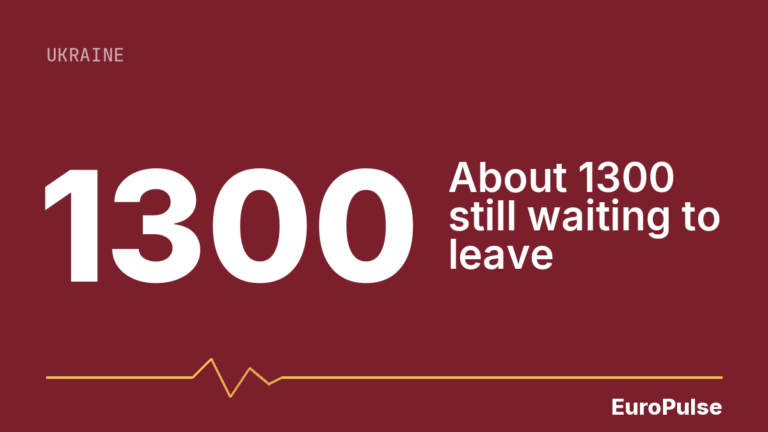
There was agreement on the first day, above all on the issue of prisoners. “One would like to exchange 1,000 for 1,000, possibly 1,500 for 1,500, a big exchange,” Zelensky said, according to Handelsblatt and ZDF, at a press conference in Copenhagen, where he was on Tuesday. The US delegation would travel to Russia “with this agenda” after the negotiations. The Ukrainian news outlet Ukrainska Pravda had reported, citing sources in the Ukrainian negotiating group, that agreement had been reached on a major exchange; the news agency Interfax-Ukraine also reported this without details; there was initially no official confirmation, as tagesschau.de reported.
According to Ukrainian figures, there have been at least 78 prisoner exchanges since the war began in February 2022, in which a total of just under 10,000 Ukrainians were freed, as ZDF reports. At the last direct talks in February in Geneva, an exchange of 500 prisoners each was agreed and implemented in two stages in March.
Kyiv insists on security guarantees and borders
Ukrainian Foreign Minister Andrii Sybiha, on Ukrainian television, rejected changes to administrative borders as part of a negotiated settlement. Russian statements that they controlled 90 per cent of the regions of Donetsk and Luhansk referred to as the Donbas were false: “Ukraine controls 20 per cent of the territory,” he said, according to Handelsblatt. He called a corresponding proposal reported by the British magazine The Economist “nonsense” that he would not discuss.
The Europeans are pressing for a greater role. German Foreign Minister Johann Wadephul said on the sidelines of the G7 summit in Paris: “The next round, wherever it takes place, must in our view take place with European participation,” as tagesschau.de reported. US Secretary of State Marco Rubio said there, according to tagesschau.de, that the Europeans should join the table in the long term. Representatives of several European states as well as NATO and the EU have travelled to Abu Dhabi but have so far not sat at the official negotiations.
The former chairman of the Munich Security Conference, Wolfgang Ischinger, does not expect substantial progress before the second day. “I am very sceptical whether what is now taking place in Abu Dhabi and in the coming weeks in talks will lead to a breakthrough,” he told the Funke media group, according to Handelsblatt. Putin would not be bought into concessions with economic benefits; the US was sending the “wrong signals”.
According to the French newspaper Le Monde, the talks have so far produced no recognisable results; Moscow continues to reject a ceasefire. ARD correspondent Silke Diettrich said, according to tagesschau.de, that an end to mutual attacks should not be expected after the negotiations. The talks are the first direct negotiations between Ukraine and Russia at working level in more than eight months.
Earlier coverage: Abu Dhabi talks: what has changed in nine months, and what hasn’t