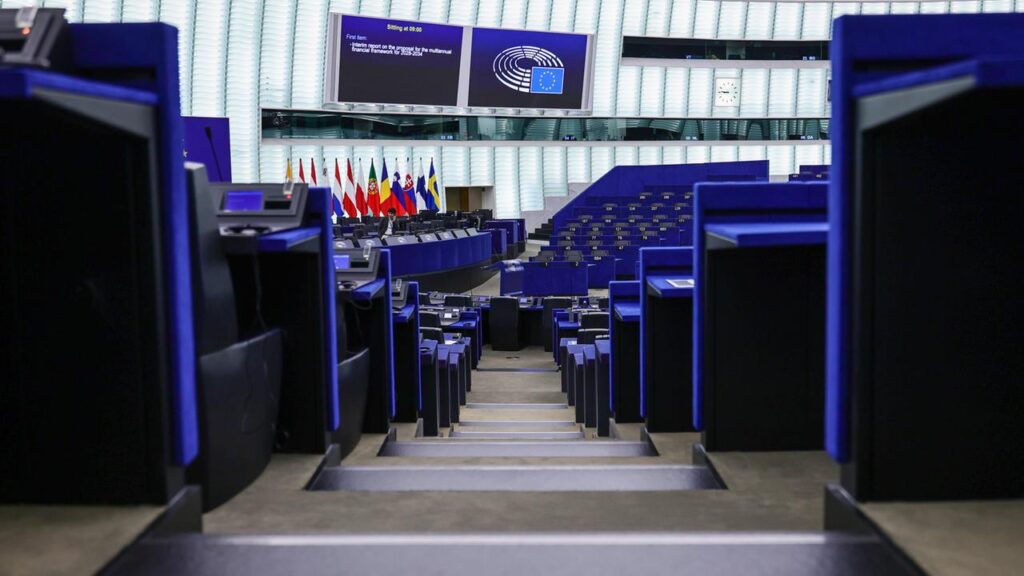
As Tagesschau reports, the European Parliament (EU Parliament) is demanding a significantly higher budget in negotiations on the next multiannual budget of the European Union (EU). This concerns the so-called two-trillion-euro question, i.e., whether the next EU financial framework should reach a volume of two trillion euros. The EU Parliament is demanding more money for agriculture, industry, and security, putting it on a collision course with Berlin.
Negotiations on the EU's Multiannual Financial Framework (MFF), which sets expenditure for a seven-year period, are approaching. The EU Parliament has set out its position in a resolution calling for a higher budget than proposed by the European Commission. The Commission had submitted a proposal that, in Parliament's view, is insufficient to meet current challenges.
Particularly controversial is the question of whether the next budget should reach a volume of two trillion euros. The EU Parliament supports this demand, while the German government under Chancellor Olaf Scholz (SPD) and Finance Minister Christian Lindner (FDP) prefers a smaller budget. Germany, as the EU's largest net contributor, would be more heavily burdened by a higher budget.
The EU Parliament argues that more money is needed for agriculture, industry, and security to make the EU fit for the future. In agriculture, funds for the Common Agricultural Policy (CAP) should be increased to ensure food security and support the ecological transition. For industry, Parliament calls for more investment in key technologies such as artificial intelligence (AI) and semiconductors to strengthen the EU's competitiveness. In the area of security, spending on defense and protection of external borders should be increased.
Negotiations on the MFF are traditionally marked by tensions between EU institutions and member states. The EU Parliament has a say in adopting the budget and can demand changes. Member states, particularly net contributors, try to limit spending.
The German government has so far been cautious about the EU Parliament's demands. Finance Minister Lindner emphasized the need for budgetary discipline and warned against an excessive expansion of the EU budget. Other net contributors such as the Netherlands and Sweden are also skeptical of a higher budget.
Negotiations on the next MFF are expected to intensify in the coming months. The EU Parliament has announced it will resolutely defend its position. If no agreement is reached, a protracted dispute threatens, which could impair the EU's ability to act.
The two-trillion-euro question thus remains a central point of contention in the upcoming budget negotiations.
Source: Tagesschau