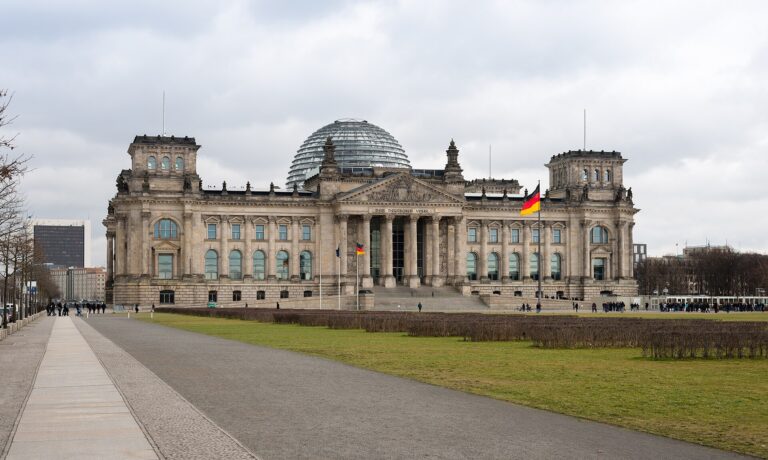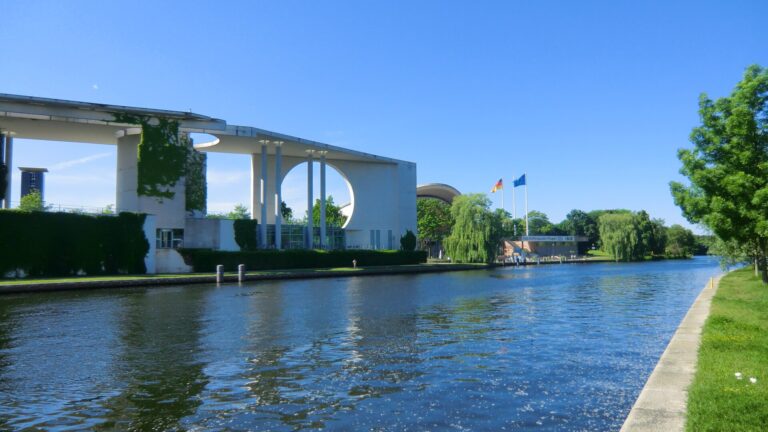
Since the Coalition of the Willing met in Berlin on 19 November, Washington has used one phrase for Ukraine’s postwar protection: guarantees “modelled on Article 5”. Look closely and Washington, Kyiv and Moscow turn out to mean quite different things by it.
What Kushner said, and how Moscow answered
Jared Kushner, Donald Trump’s son-in-law and one of the US negotiators, told a press conference in Berlin that the US had got the Russians “comfortable with that concept”: any security guarantee for Ukraine would be based on Article 5. Moscow did not react at first. The next day Deputy Foreign Minister Sergei Ryabkov said even looking for a formula for quasi-membership of NATO, or a “creative solution”, was unacceptable to Russia. After meeting Trump and Xi Jinping, Vladimir Putin again called foreign troops in Ukraine unacceptable.
Volodymyr Zelensky answered with a question: did both sides understand Article 5 the same way? For him, he said, it means partner forces on your territory.
What the treaty text actually says
It says nothing of the kind. Article 5 commits allies to assist an attacked member with “such action as it deems necessary, including the use of armed force”. It has been invoked once, after 9/11. Experts quoted by the BBC say deterrence rests less on the wording than on decades of joint planning, a unified command and exercises. David Kettler of the Center for European Policy Analysis says a substitute outside NATO would need the same serious preparation; Eric Ciaramella of the Carnegie Endowment thinks Witkoff and Kushner use the concept very loosely.
The idea is not new: Steve Witkoff spoke of “Article 5-like” protection after the Alaska summit in August 2025. Kyiv also remembers the 1994 Budapest Memorandum, which gave no military backing.
What a package would contain is disputed. As the BBC summarises US media reports, Moscow would accept it if sanctions were lifted and no NATO troops entered Ukraine; another report speaks of a freeze on the front line and says Washington could even consider NATO membership if Ukraine withdrew from parts of Donbas.
Europe’s own option
Europe’s answer is the Multinational Force-Ukraine, the military arm of the coalition. According to the UK government it was set up in January 2026 under a declaration by the UK, France and Ukraine, and 24 nations have pledged contributions. It is neither a peacekeeping force nor a NATO mission, and would deploy at Kyiv’s invitation only once hostilities have ended. This month the coalition is rehearsing deployment logistics in Poland.
Our assessment, with limited confidence: Article 5 will most likely stay a formula without a mechanism for now, because Moscow rejects both troops and any link to NATO, and Washington has not said what it would itself do. A workable package would probably need concessions on the front or on sanctions. If fighting stops, the European force may become the real guarantee. An expert quoted by the BBC warns the Kremlin could use the talks to buy time.
Sources: BBC News Ukrainian, Meduza, Joyn/dpa, GOV.UK