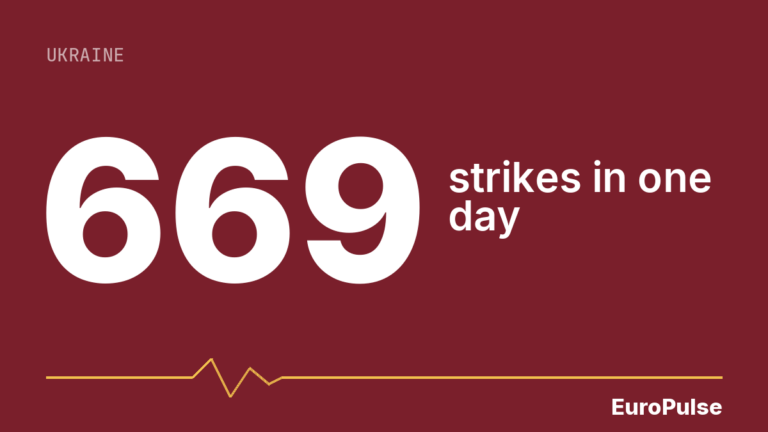
Russian forces carried out 669 attacks on the Zaporizhzhia region within one day. That is reported by the news agency Ukrinform, citing the co-chair of the regional defence council, Ivan Fedorov, who published the figures on Friday, 16 October, in his Telegram channel. According to this, the authorities registered 78 reports of damaged residential buildings, cars and infrastructure facilities.
According to Fedorov, the attacks are spread across several types of weapons: 29 air strikes, 472 drones of various designs – predominantly FPV drones –, 16 multiple rocket launcher shellings and 152 artillery strikes. According to his information, those hit included the city of Zaporizhzhia itself as well as places such as Komyshuvakha, Kushuhum, Orikhiv, Huliaipilske and Stepnohirsk – 48 settlements in all.
The figures come from the region and cannot be independently verified. Ukrinform does not give any casualty figures for the current attack.
What is known about earlier attacks
Only on 10 October had a Russian attack on Zaporizhzhia, according to the Ukrainian authorities, killed 15 people, including three children; 16 more people were injured, two of them children. The Ukrainian President Volodymyr Zelenskyy wrote at the time on Facebook that Russia had “dropped five glide bombs on residential buildings in Zaporizhzhia”. In the same night, 13 regions of Ukraine had been attacked, with destruction to residential buildings, infrastructure and railways.
Zelenskyy linked the attack to the then decision by the USA to ease sanctions on Russian diesel exports. “Any easing of sanctions against Russia” without a lasting agreement was “an obvious weakness”, he declared. US President Donald Trump had announced an agreement on deliveries of hundreds of thousands of tonnes of diesel from Russia after a conversation with Kremlin chief Vladimir Putin.
The Zaporizhzhia region has been under fire since the beginning of the Russian war of aggression. The figures on individual places and weapon types come from the Ukrainian regional administration; there is no independent confirmation.