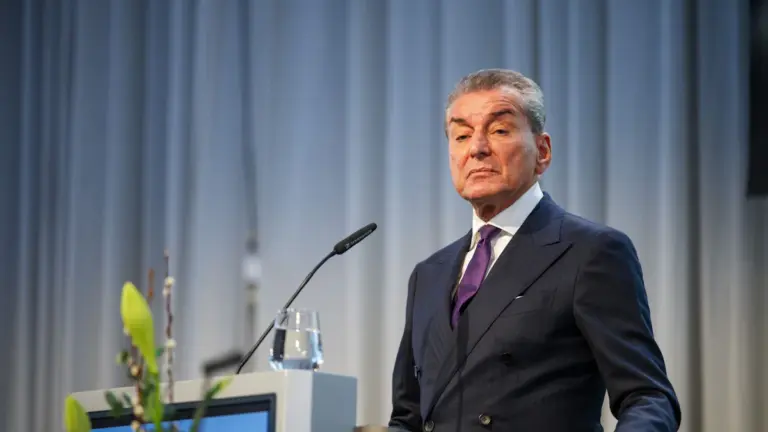
Bayreuth Festival first disinvited and then reinvited publicist Michel Friedman. The incident exposes a deep-seated German problem: the neurotic longing to be spared from one’s own history. Friedman, one of the country’s few remaining public intellectuals, was scheduled to speak at the festival’s 150th anniversary about antisemitism, Richard Wagner, and coming to terms with the past.
A scandal with a backstory
The event was initially canceled citing “security concerns.” In reality, it is about something more fundamental: the inability of many Germans to admit that Richard Wagner not only created musically groundbreaking operas but also wrote an original text of modern German antisemitism. The disinvitation of Friedman, who is himself Jewish, exposed this sore point.
Media and societal dimensions
The Friedman case shows in all its facets, including the media, how difficult German society finds it to deal with its own past. The revised decision—the reinvitation—came at the request of Wagner’s great-granddaughter Katharina Wagner. She brought Friedman back to ask precisely those questions that preoccupy the country: How does one deal with an artist whose work is inextricably linked to antisemitic ideas? And why is the answer so difficult?
Conclusion: A lesson in German memory culture
The scandal surrounding Friedman is more than a local controversy. It is a lesson in German memory culture and its contradictions. The fact that a Jewish intellectual was first disinvited and then reinvited shows how divided society is in dealing with its history.
Source: www.sueddeutsche.de