The Bundesrat let Germany’s emergency care reform through on Friday. A motion to call the mediation committee failed to win a majority in the plenary, so the law can now be signed. The Länder’s own committees had recommended the opposite. According to AFP and dpa-AFX, the deciding factor was a protocol statement the federal government tabled at short notice, promising corrections. The Bundestag passed the law on 15 October, as we reported.
What changes for patients, and when?
None of Friday’s reports gives an exact start date; on the information so far, the law is due to take effect in 2027. The rebuild will probably take years, because the new structures have to be created first. So the reform is unlikely to change how your next emergency is handled – that is our assessment.
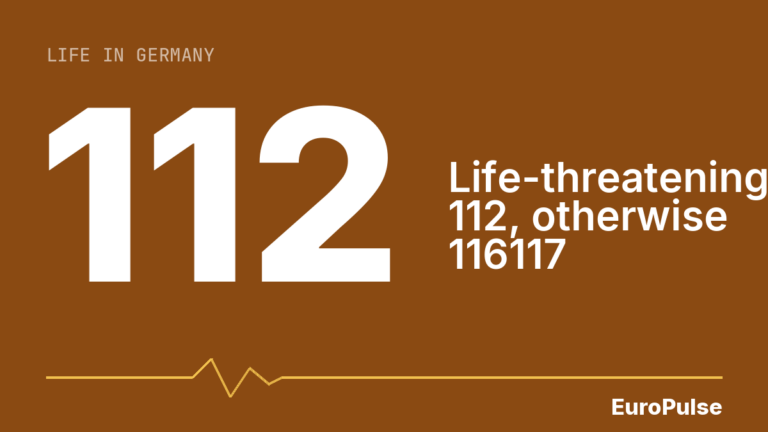
According to the Federal Health Ministry, selected hospitals will host integrated emergency centres in which the emergency department, the doctors’ on-call practice and a central triage point work together. There it is decided whether a patient belongs in the emergency room, the on-call practice or an ordinary practice. The number 112 stays unchanged for life-threatening cases. The 116117 line becomes a round-the-clock acute-care control centre offering phone or video advice, and it can send a doctor to the patient when needed. The target is to answer 75 per cent of calls within three minutes and 90 per cent within ten.
Who do I call if I am not sure?
The rule of thumb already applies and does not change: for a suspected heart attack or stroke, severe breathlessness, heavy bleeding or loss of consciousness, call 112 at once. For problems that cannot wait for the next surgery hours but are not life-threatening – a fever at the weekend, a twisted ankle, a child’s earache – 116117 is the right line. In future, doctors in emergency centres and on-call practices are to be allowed to hand out a small quantity of medicine when pharmacies are closed.
The ambulance service is also reclassified: emergency medical care becomes a benefit in its own right under statutory health insurance. Until now only the transport was reimbursed. A federal expert body is to develop common framework conditions, while the Länder keep their powers.
What the dispute was about
The Länder see federal encroachment on their authority over ambulance services and hospital planning, and they want binding rules on funding standby and investment costs. According to the trade service medconweb, the law does not contain them. Hospitals doubt that payment for the new centres will cover their costs. The law is also tied to changes in the health insurers’ savings package: hospitals are to receive 550 million euros more than originally planned, and spending brakes on psychotherapists are to be eased. Here too, promised corrections are not yet in the legal text.
In practice, the familiar routes stay in place for now. Keep your insurance card handy and, if in doubt, dial 116117 first – sound advice today as well.
Sources: Federal Health Ministry, Health Ministry FAQ, AFP, dpa-AFX, medconweb