Within 24 hours Europe has received two signals from two directions: Moscow is opening a door, Washington is starting a clock. In between came a night of Russian missiles on Kyiv – eight people were killed in the capital, according to Ukrainian officials, and several bridges were hit.
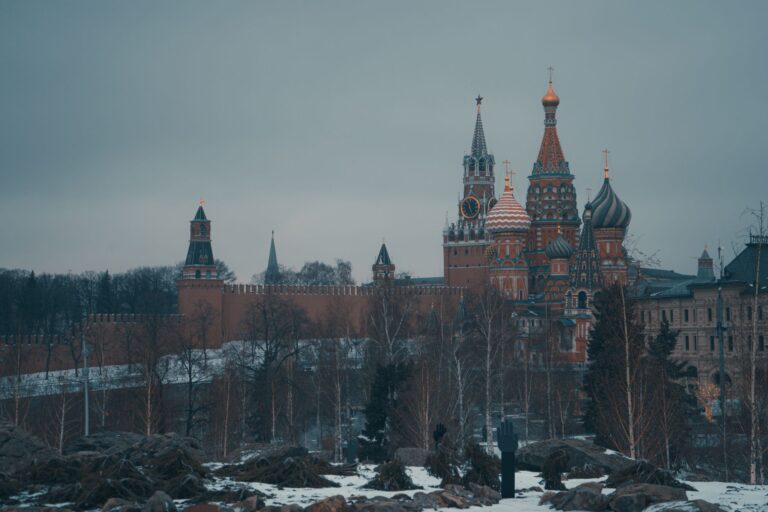
At the summit in Shenzhen on Thursday, Vladimir Putin said Russia had proposed through diplomatic channels that the Europeans come to Moscow. The aim, he said, was to understand their position before deciding in what format dialogue with Ukraine would continue. Deputy Foreign Minister Sergei Ryabkov told Interfax that a visit by representatives of Germany, France and the UK (the E3) could be arranged quickly, but would not automatically mean a role in the negotiations. Moscow, he said, was waiting for an answer. Handelsblatt reports that Russia had agreed in principle, under US pressure, to bring the Europeans in.
Who sets conditions
Paris answered first, with a condition. An adviser to President Emmanuel Macron told reporters the Europeans were ready to go if Moscow clearly signalled that they would have a “full role” and take an active part in the next round with the United States and Ukraine. German Defence Minister Boris Pistorius, speaking in Warsaw, first said that turning down an invitation would be “completely the wrong signal” – a remark some heard as willingness to negotiate in Moscow. He later clarified that Moscow was “not the place of choice” and that any talks must include a ceasefire: “no continuing to shoot while pretending to want negotiations.”
Germany’s Foreign Ministry struck a harder note the same day. After Warsaw said a Russian Kh-101 cruise missile had come down on Polish territory, the ministry wrote on X: “Instead of signalling a willingness to negotiate, Putin is signalling the opposite: he is choosing confrontation.” Berlin is speaking in two registers at once – dialogue and deterrence.
A deadline not set in Moscow
The second pressure comes from the US. The Financial Times, citing insiders, reports that Donald Trump wants Kyiv to reach a peace deal with Russia by early January at the latest. Washington reportedly told Europeans and Ukrainians the agreement should be done before the shift of power in Congress: Republicans lost their majorities in both chambers in the early-November midterms. We have seen no official confirmation from the White House, so we report this as the newspaper’s account.
If the deadline is real, that leaves a little over six weeks for a trip to Moscow, coordination among three capitals, a common line with Kyiv and a round with the Americans. Past experience suggests that is very little.
Three readings
First: the invitation is a genuine opening, and Europe only needs to state clearly what a seat at the table requires – a ceasefire, Ukraine’s participation, a place in the US round. Second: it is a wedge. Moscow could receive capitals one by one, test for concessions and cast Europe as a supplicant while the strikes go on. Third: it also signals pressure. Industry sources say crude processing at Russian refineries has fallen 45 per cent since late October, several regions are rationing petrol, and the Kerch bridge was attacked three times this week. Putin has threatened a “far more painful” response. Those who come to the table often first want to show they can still strike.
Which reading is right cannot be proved today. Our assessment, with due caution: most likely a mix of the first and second. A European move without prior coordination with Kyiv and Washington would benefit Moscow most; a coordinated one with clear conditions, least.
For people in Ukraine winter has already arrived: nuclear plants had to cut output after the attacks and power failed in Kyiv and ten regions. Chancellor Merz told the German-Ukrainian business forum that fighting corruption remains a condition for further financial aid; the same day the European Commission paid out €7.9 billion to Ukraine. Diplomacy is running in parallel with cold, power shortages and missiles. Earlier coverage: Berlin summit: Europe wants a seat at the table.
Sources: Handelsblatt, DW, t-online/dpa, FAZ