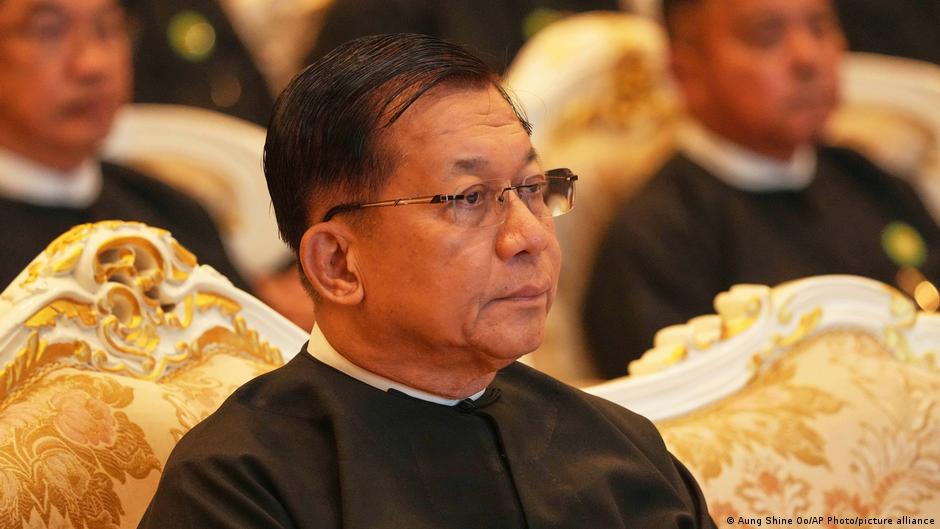
Min Aung Hlaing, the leader of Myanmar's military junta, has declared himself President, five years after a coup that plunged the nation into a devastating civil war. His selection by a military-friendly parliament has raised international alarm and threatens to further destabilize the already volatile situation in Myanmar.
Critics have labeled the appointment as a mere facade, suggesting it is unlikely to alter the balance of power significantly. Hlaing has maintained a hardline stance against civilians and opposition groups throughout his military rule, which could intensify the ongoing violence and suffering among the populace.
The military government is also planning to establish a new body to oversee both military and civilian administration, perceived as an effort to consolidate Hlaing's grip on the armed forces while maintaining the appearance of a civilian government. Experts warn that such measures could drastically diminish prospects for peace and stability in the country.
The international community has strongly condemned Hlaing's appointment, calling for a return to democratic governance. The persistent fighting and humanitarian crisis in Myanmar reflect the deep divisions left in the wake of the coup. The situation remains tense, and it is uncertain whether a political resolution will emerge soon.
Given the escalating violence and the junta's repressive actions, the question persists as to how long the international community can remain passive. The coming months will be crucial for Myanmar's future and the potential for dialogue among conflicting parties.