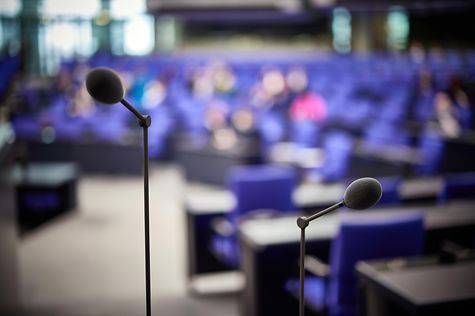
This week, the federal government had to face critical questions from the opposition—and the governing parties remained silent on the matter. During the regular question time in the German Bundestag on March 18, 2026, only members of the opposition factions directed their inquiries to the ministries. In contrast, the governing coalition of the Union and SPD did not submit a single written question.
In total, representatives of the federal government answered 60 pre-submitted questions over 45 minutes. The Greens were the most active with 25 inquiries, closely followed by the AfD with 23 questions. The Left Party posed twelve questions. This distribution clearly shows that the parliamentary oversight function is currently being carried out almost entirely by the opposition benches.
Particularly in focus was the Federal Ministry of Transport, which had to address 20 questions. Thuringian AfD member Stefan Schröder inquired there about specific measures to tackle the “backlog of renovations” in transport infrastructure. The Federal Ministry of the Interior had to answer nine questions, and the Ministry of Economic Affairs six.
International topics also played a role. Lea Reisner, a Left Party member of parliament from North Rhine-Westphalia, wanted to know from the Foreign Office which overflight rights the German government has granted to the U.S. since the start of the attacks on Iran – and on what basis in international law this decision rests. Five questions went to the Foreign Ministry.
Another five inquiries were directed at the Federal Environment Ministry and the Digital Ministry. The Health Ministry, the Construction Ministry, and the Justice Ministry each had to deal with two questions. Only one question each went to the Agriculture Ministry, the Federal Chancellery, the Finance Ministry, and the Labor Ministry.
At the Finance Ministry, Michael Kellner, a Green Party member of parliament from Brandenburg, inquired whether the planned reduction in electricity tax, as considered in the coalition agreement between the Union and the SPD, would now be implemented in light of the energy price crisis. This question touches a sensitive point in current government policy.
The question time procedure allows each member of parliament to submit up to two questions in advance. After a parliamentary state secretary or federal minister answers, both the questioner and other members can ask follow-up questions. If there is no time for this, open questions are answered in writing.
The noticeable restraint of the government factions raises questions. In a functioning parliamentary democracy, question time serves not only the opposition for oversight but also government members to set topics and accompany government work. That the Union and SPD did not use this opportunity could point to internal coordination processes or strategic considerations.
The focus of the questions shows where the opposition sees a need for action: transportation infrastructure, energy policy, and international entanglements are at the top of the agenda. The federal government must now not only provide answers but also face the accusation that the governing factions are not actively exercising their oversight rights.
In the coming weeks, it will become clear whether the ministries’ written responses can address the opposition’s critical points. The next question time will then reveal whether the pattern repeats itself – or whether the government factions once again make stronger use of their parliamentary rights.
Monument to admonish and remember the victims of the communist dictatorship in Germany
Bundesregierung