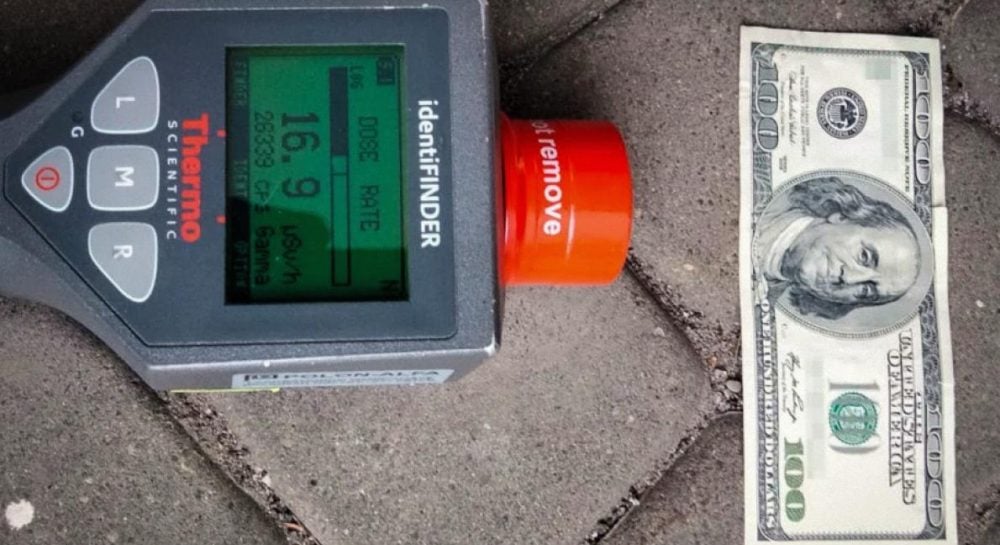
As the Ukrainian news agency UNIAN exclusively reports, Polish border officers at the border with Poland stopped a Ukrainian citizen who was attempting to bring a radioactively contaminated banknote into the country. The woman was consequently not admitted to Poland. The seized banknote is a 100-dollar bill.
Measurements by the Polish Border Guard agency revealed that the radiation exposure of the banknote exceeded the permissible norm by 1905 times. According to UNIAN, which cites information from Polish authorities, the Ukrainian traveler underwent a routine check at the border control point, where the elevated radioactivity was detected.
The exact circumstances of how the banknote became contaminated or where it originated from are not yet known. The Polish border guards initiated the necessary safety measures and secured the find. A spokesperson for the Polish Border Guard stated to UNIAN: 'Such incidents are extremely rare but are handled with the highest priority to ensure security at the EU external borders.' The Ukrainian woman was turned back; further details about her person or possible consequences were not disclosed.
Experts point out that radioactive contaminations on banknotes have occurred sporadically in the past, from former exclusion zones or due to improper handling of radioactive materials. The European Union (EU) has established strict limits for radioactive exposure, the exceeding of which requires immediate measures.
The incident underscores the importance of radiological controls at the EU external borders, which have been conducted as standard for years. In the past, similar cases have been documented, for example in Belarus or Russia, where contaminated banknotes from the post-Chernobyl disaster period were reportedly in circulation.
The Polish authorities have launched investigations to clarify the origin of the banknote and the contamination pathway. Based on current assessment, no threat to public safety is assumed from this isolated case, as the banknote was promptly secured. The relevant authorities in Ukraine have been informed about the incident, but a statement from the Ukrainian Border Guard agency is still pending.
According to UNIAN, this is the first such case this year at the Polish-Ukrainian border. Cooperation between Polish and Ukrainian border authorities has been intensified in recent years, including within the framework of EU programs for border security. The incident shows that despite modern control technologies, unexpected risks can arise at border crossings.
The Polish border guards emphasized in their communication that all travelers continue to be urged to exercise increased vigilance regarding carried items.