A dispute came into the open at the Ukraine Defence Contact Group in Brussels on Tuesday that is likely to shape the next few days of diplomacy: may Kyiv strike deep inside Russia, and who gets a say in how it fights?
It was triggered by Elbridge Colby, a senior Pentagon official representing the United States. According to Radio Svoboda and Evropeiska Pravda, he said Ukraine’s deep strikes do not bring the end of the war closer, and that medium-range strikes supporting the front are more effective. Whether Washington is changing its line has not been officially confirmed.
Three replies, one tone
The response was quick. UK Defence Secretary Wes Streeting, who co-chairs the group, said, per Radio Svoboda, that it is not for the West to tell Ukraine how to defend itself, and that deep strikes had weakened Putin’s war machine and bought time. German Defence Minister Boris Pistorius, the other co-chair, was the sharpest: he called criticism of attacks on strategic military targets in Russia rather pointless and said the focus should be on Russian strikes on energy, water and heating infrastructure. NATO Secretary General Mark Rutte avoided a direct judgement, saying Ukraine must defend itself and Russia’s war machine must be disabled.
The timing is no accident. Overnight Ukraine hit the Kerch Bridge; one arch and part of the roadway fell into the sea (our report). Defence Minister Yevhen Khmara pointed in Brussels to the right of self-defence, and the General Staff cites Article 51 of the UN Charter.
Money is more concrete than the debate. London is providing £240 million: according to the UK Ministry of Defence, more than 1,000 short-range air defence missiles with launchers and over a dozen radars, with missiles built by Thales in Belfast. It is part of a £500 million package for Ukraine’s winter; deliveries start in mid-December, on top of 400 missiles supplied earlier. President Zelensky proposed a swap: allies hand over existing interceptors now and receive newer ones later. “This is not a donation. It’s an exchange,” he said, according to Kyiv Post. He also asked for 40 more F-16s and reminded allies that roughly €8 billion of the €70 billion pledged at the NATO summit in Ankara has not been delivered, per Radio Svoboda.
What is at stake on Thursday
The row looks like a prelude. On Thursday 19 November, US envoys Steve Witkoff and Jared Kushner are due to meet Ukrainian and European representatives in Berlin on security guarantees and a reconstruction plan, Axios reports, citing a US official. The same day Donald Trump meets Vladimir Putin and Xi Jinping in Shenzhen on the sidelines of APEC; neither Ukrainians nor Europeans will be there. Trump has said he will raise Ukraine.
Our assessment: Berlin gets a double role. Europeans want to show Washington they carry the load – with money, missiles and a united front – while making sure Ukraine is not decided without them. The more clearly Pistorius and Streeting defend the deep strikes, the harder it is for Washington to treat them as a bargaining chip. That is not certain: Colby’s remark is so far the only public statement of its kind, and what the US side actually tables in Berlin will only be known on Thursday.
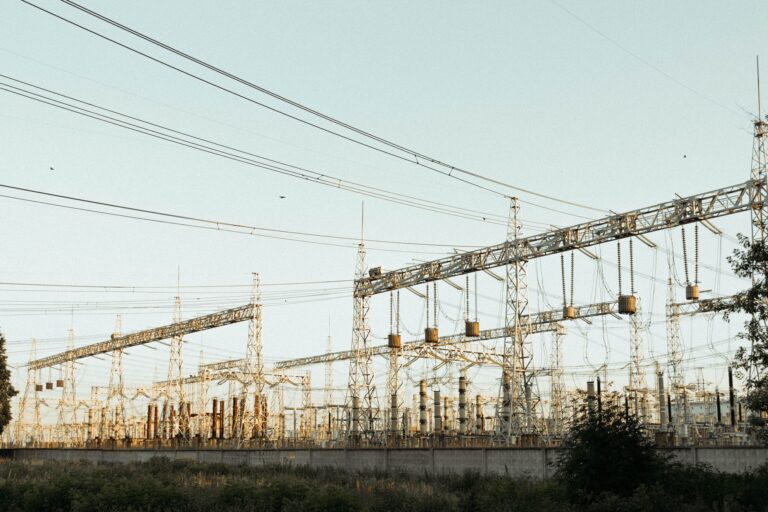
For Ukrainians in Germany this is not abstract. In winter Russian strikes target power and heat, and every extra air defence missile helps decide how many homes in Kyiv, Kharkiv or Dnipro stay heated.
Sources: GOV.UK, Radio Svoboda, Yevropeiska Pravda, Kyiv Post, TASS/Axios