Ukraine is ready to stop its strikes on Russian oil refineries if Russia stops shelling Ukraine’s energy infrastructure. President Volodymyr Zelenskyy said this on Sunday in a post on the messaging service Telegram, as reported by the news agency Ukrinform and the news outlet Ukrainska Pravda. “Any de-escalation must be mutual and include real guarantees,” Zelenskyy wrote. “The real reason for the war in Europe is Russia, and only Russia. Even today it is realistic to stop the strikes on energy infrastructure, but Putin does not want to do that.”
Zelenskyy was responding to the ongoing Russian attacks of the past week. According to his figures, Russia used around 1,450 glide bombs, 75 missiles of various types and more than 1,640 combat drones during this period, about 60 per cent of which had jet propulsion. “Today alone, the search and rescue operations in Zaporizhzhia were completed, where Russia killed 23 people, including four children,” Zelenskyy wrote. “Yesterday Russia hit a medical facility in Kharkiv, during the night there were Russian attacks on civilian infrastructure, residential buildings and the energy supply. In the morning Russia hit a five-storey building in Sloviansk – an entire entrance section is destroyed, there could be people under the rubble.”
What lies behind the statement
The statement comes amid growing tensions between Kyiv and Washington. US President Donald Trump announced on 9 October, after a phone call with Russian President Vladimir Putin, an agreement on the supply of Russian diesel to the US and the world market. Zelenskyy sharply criticised this step and called the lifting of sanctions a “completely terrible step” – a “birthday present for Putin” that would give the aggressor additional billions to continue the war. The Ukrainian president also accused Washington of using the meeting with the Ukrainian negotiating delegation in Miami as a “cover” for the arrangements with Moscow.
The Kremlin had previously described any prospect of a meeting between Zelenskyy and Putin at the G20 summit in Miami as “impossible”. Kremlin spokesman Dmitry Peskov said Putin would only receive Zelenskyy in Moscow. Russian Foreign Minister Sergey Lavrov said Russia would not end its “military special operation” even in the event of possible peace talks. The assistant to the Russian president, Yuri Ushakov, said Putin had rejected the possibility of peace negotiations in the phone call with Trump and stressed that Russia would continue the fighting until it had achieved “all its goals”.
After the revelations about the US-Russian diesel agreement, media reported that the talks between representatives of the US, Ukraine, European countries and NATO in Miami on ways to de-escalate and end the war had ended early. The adviser to the Ukrainian president for communications, Dmytro Lytvyn, said on 10 October that the Ukrainian delegation that had taken part in the talks in the US was already on its way home.
Kyiv relies on its own weapons and air defence
Zelenskyy announced that he would continue coordination with the partners. “Today we will continue the coordination with the partners – there will be talks with European leaders. Practically every day we coordinate at various levels and work on additional defence packages, above all air defence and ammunition for the combat aviation,” he wrote. “All to protect the lives of our people and the interests of Ukraine.”
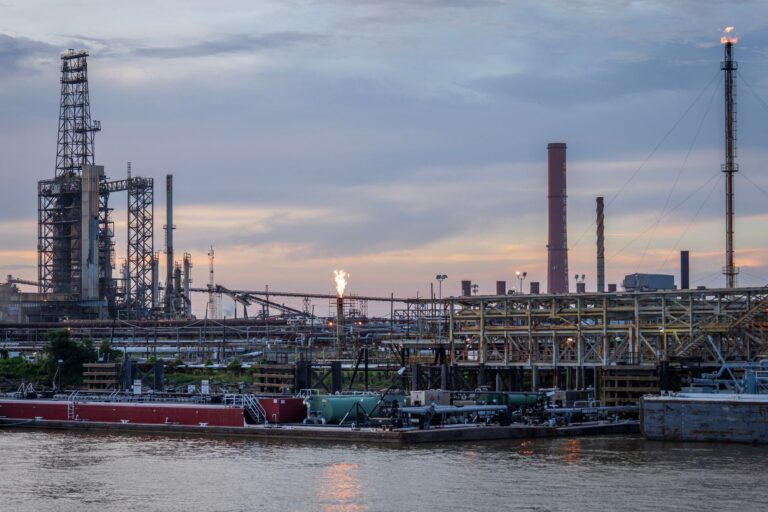
Back in early October, Zelenskyy had announced in an interview with the news agency Reuters that he would intensify the strikes on Russian oil refineries. “Their attacks on our energy” must be answered with attacks “on their energy”, “above all on oil refineries”, he said at the time. “That is what brings them money for this war.” The Ukrainian president said the intelligence services had documents on a “new doctrine” of Russian President Vladimir Putin that permits attacks on infrastructure such as roads, schools and hospitals in order to put pressure on people to leave the capital and other cities. Ukraine, unlike Russia, would not attack civilian targets, he stressed. Russia also denies targeting civilian targets.
The latest attacks show how much both sides are targeting each other’s energy infrastructure. In mid-September, according to the Ukrainian air force, Russia used 453 drones of various types in one night, of which 409 were shot down; 13 targets were nevertheless hit. In the city of Stryi in the Lviv region, a multi-storey residential building, an outbuilding near a school and buildings around the railway station were damaged. In Izium, according to the head of the Kharkiv regional military administration, Oleh Syniehubov, a 26-year-old woman died from the explosion of an explosive device; in the city of Kharkiv and 15 settlements in the region, three people were injured, including a 73-year-old woman. In the Volyn region, according to Governor Roman Romaniuk, at least five people were injured. In Lutsk, debris hit an evacuated train and caused a fire.
At the same time, Ukraine attacked Russian oil facilities. In a drone attack on an industrial facility in Nizhnekamsk in the Republic of Tatarstan, according to Russian reports, two people died and twelve others were injured. The Ukrainian military intelligence service said it had hit the Slavyansk-ECO oil refinery in Slavyansk-on-Kuban in southern Russia in the Krasnodar region, damaging a central oil processing unit and the tank farm.
For the people in Ukraine, the ongoing wave of attacks means further nights in shelters, power cuts and water shortages. In the Kyiv region, damage to an energy facility led to a deterioration in the supply to the capital and interruptions to the water supply; the Kyiv metro was temporarily shut down because the external power supply centres failed. In Germany and the EU, the latest developments are likely to further fuel the debate about support for Ukraine and the sanctions policy towards Russia – especially as the US under Trump now apparently relies on Russian diesel.
Editor’s note: The assessment that the latest developments are likely to fuel the debate in Germany and the EU is an editorial judgement. It is based on the reactions and agreements cited in the sources.