On the morning of 10 October, Russia used a jet-powered Shahed drone against the western Ukrainian city of Lviv for the first time. According to the BBC, citing the city’s mayor, Andriy Sadovyi, and the head of the regional administration, Maksym Kozytskyi, the drone flew across the whole of Ukraine during the previous night and reached the city in the morning. According to Kozytskyi, Ukrainian air defence tried to intercept the drone. Residents reported an explosion on the edge of the city.
The attack on Lviv is part of an unusually massive wave of attacks on western Ukraine. On the night of 10 October, according to the Ukrainian air force, Russia attacked the west of the country with jet drones on this scale for the first time. The BBC reports numerous impacts as far as Lutsk and Dubno in the Rivne region. The mayor of Ivano-Frankivsk, Ruslan Martsinkiv, reported at least five drones that hit the city during the night. Ivano-Frankivsk and now Lviv had previously been considered barely reachable for jet-powered Shaheds.
A weapon that has only been used on a massive scale since the summer
Jet-powered Shahed drones are a particularly difficult target for Ukrainian air defence. They reach speeds of more than 500 kilometres per hour and fly at high altitude, which makes them hard to intercept with mobile fire units or conventional interceptor drones. That is reported by the BBC, citing Ukrainian military observers.
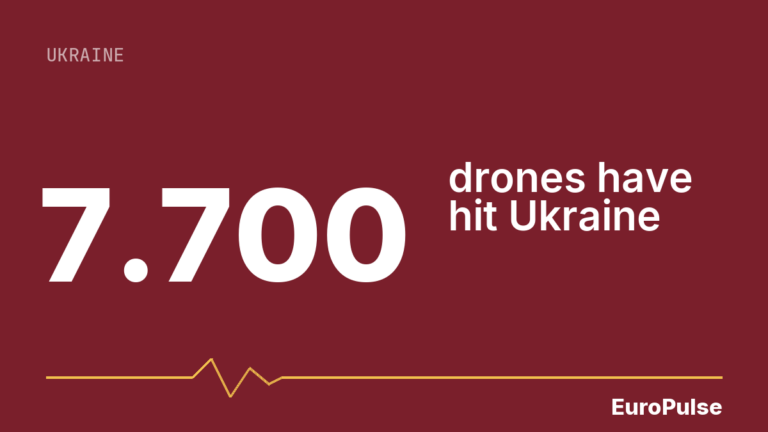
The figures show how quickly Russia has expanded this weapon. According to Colonel Yuriy Ihnat, spokesman for the Ukrainian air force, the Kremlin had fired almost 7,700 turbojet-powered drones at Ukraine by 21 September. In June, according to Ihnat, there were around 350 jet drones, in July 1,500 and in August more than 2,800. For the whole of September, Ihnat gave a figure of 3,500 on 7 October. At least half of all Russian long-range drone attacks now involve jet-propelled systems, as Business Insider reports.
“This shows that the enemy is not letting up and is finding ways to buy these jet engines and other components and assemble them on Russian territory,” Ihnat told the Ukrainian broadcaster TSN. Russia now uses more than 2,000 jet-powered drones per month, as Business Insider reports, citing Ukrainian statements. According to its own statements, Ukraine now intercepts only around 60 per cent of Russian drones. When Russia mainly used propeller-driven Shaheds, it was still 90 per cent.
Why defence is so difficult
One reason for the growing number of attacks is the cost calculation. An interceptor missile costs around one million dollars, while a single attack drone costs between 25,000 and 40,000 euros, according to Euronews. Moscow deliberately exploits this imbalance by launching waves of drones intended to exhaust the more expensive air defence.
Production is mainly based in the Alabuga special economic zone in Tatarstan, around 1,200 kilometres from the Ukrainian border. The complex covers more than 2.8 million square metres. After Ukrainian attacks on the facility, Russia moved parts of the manufacturing underground. According to Ukrainska Pravda, the OSINT analyst Dnipro Osint estimates that around 42,000 square metres of underground production space have already been created in Alabuga – roughly the size of six football pitches. There, composite fuselages are shaped, engines are built and onboard electronics are assembled.
Estimates of production volume vary. The Center for Strategic and International Studies assumed around 5,500 drones per month in March 2026. Ukrainian military intelligence estimated production in August at around 3,000 Geran-4 and Geran-5 as well as around 2,800 Geran-2 per month. According to Russian media cited by The Economist, daily production of the Geran-2 is now more than 100 units, with a target of 500 per day.
For people in western Ukraine, this means a new situation. Regions that were previously considered comparatively safe are increasingly coming within reach of the fast drones. According to the BBC, observers point out that Russia wants to adapt the jet Shaheds before winter so that they can also reach the westernmost regions – in order to cause problems with heating and electricity in Lviv as well. Whether that succeeds depends on how quickly Ukraine can adjust its defences to the faster targets.