Poland’s Prime Minister Donald Tusk expects Russia to expand its hybrid attacks on Poland and the three Baltic states before Christmas. After the European Council summit in Brussels, Tusk said on Friday that the winter would be “extremely difficult”, and announced that “before 24 December” one must expect “a form of escalation”. This is reported by the Kyiv Post.
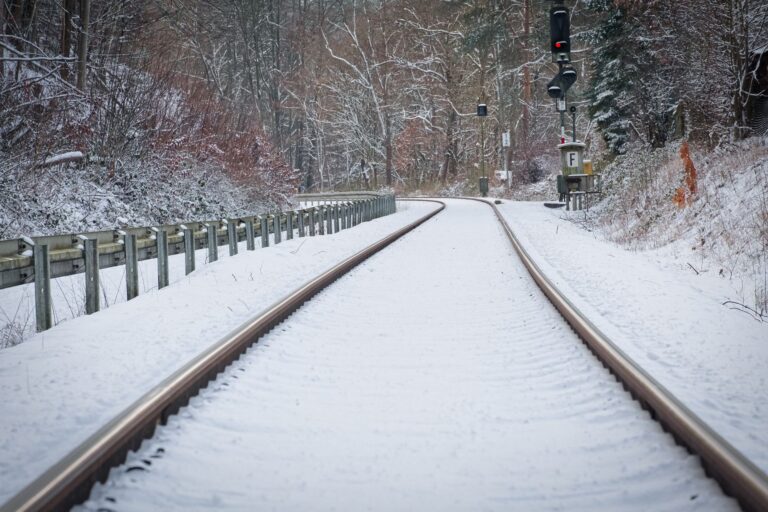
Tusk spoke at a press conference after the summit in Brussels, that is on Friday, 16 October. The risks are particularly high at the borders and along the railway lines over which vital goods are transported to Ukraine, including gas, oil and food. “We should, as before, but on a larger scale, expect sabotage attempts or provocations in Poland,” said Tusk. The threat also extends to the three Baltic states. “One message is clear: Russia will intensify this escalation and test our reaction. That is the problem,” he added.
Why Warsaw takes the warning seriously
Poland lies on NATO’s eastern flank and has for years reported a series of hostile incidents linked to Russia – including drone incursions, arson attacks and sabotage of railway facilities. The Kyiv Post refers to intelligence assessments according to which Russia could test NATO through sabotage, cyber attacks, drone activity or even a limited military operation. Europe has been on heightened alert for months.
How concrete the danger is was shown most recently by an arson attack on a Starlink ground station in Poland. The facility owned by the state telecommunications company Exatel was set on fire on the evening of 23 September in Wola Krobowska, around 60 kilometres south-west of Warsaw, as the Berliner Zeitung reports. Parts of the power supply caught fire; a switchgear unit and a power generator were damaged, among other things. According to Polish authorities, the station also serves to route internet data through Poland and into Ukraine.
Arrests in Germany, dispute over authorship
On Monday, 12 October, Prime Minister Tusk announced the arrest of two suspects in Germany, as the Bayerischer Rundfunk reports. The German police had arrested the two Turkish nationals on behalf of the Polish authorities, Tusk explained on the online service X. They are therefore suspected of having set fire to the Starlink station in the central Polish region of Masovia. Tusk spoke of a “further act of hybrid warfare”. The men were brought before the investigating judge at the Nürtingen Local Court on Tuesday, who opened the European arrest warrant and ordered detention. The public prosecutor’s offices in Stuttgart and Koblenz decide on applications to the competent higher regional courts, which rule on the extraditions.
Interior Minister Marcin Kierwiński stated that the two suspects should be charged in Poland with sabotage on behalf of a foreign intelligence service. The Minister for Special Services, Tomasz Siemoniak, said at a press conference: “We have no doubt that Russian services are behind this act of sabotage.” Russian services would increasingly turn to people from the criminal milieu. However, the Berliner Zeitung points out that the alleged Russian commissioning has so far not been confirmed by publicly available evidence and that no legally established charges have yet been brought against the two arrested men.
Poland’s Digital Minister Krzysztof Gawkowski had stated the day after the fire: “This sabotage was deliberately designed to put the station out of operation.” The fire had “disrupted internet access for various institutions, including the Ukrainian army”. Starlink belongs to the space company SpaceX of the US billionaire Elon Musk and plays an important role in the communications of the Ukrainian armed forces.
Tusk had already warned in September before the parliament in Warsaw of hybrid attacks by Russia with drones or even missiles on allies of Ukraine. “The Russian plan” included, according to intelligence information, “hybrid attacks” on countries that support Ukraine, which is attacked by Russia, he said at the time. This also concerns Poland.
Editor’s note: The assessment that the recent incidents indicate a new quality of threat is an evaluation based on the warnings cited; publicly available evidence of Russian authorship in the case of the Starlink station is so far not available.