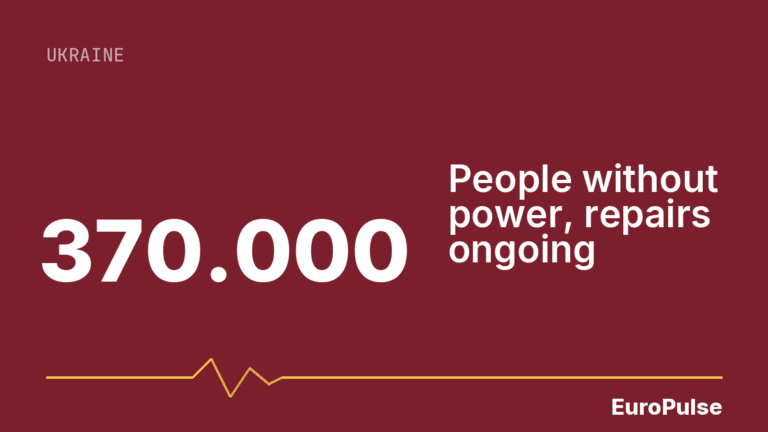
After new Russian drone attacks, 370,000 people in western Ukraine are without power. The attacks had hit substations in several western regions.
Repair work is ongoing. Ukrenerho is deploying emergency generators to supply critical infrastructure such as hospitals and water utilities. How long the power outages will last is unclear.
What has happened so far
Already in the night to Wednesday, 14 October, Russia had attacked Kyiv with a wave of missiles and drones. According to Euronews, at least three people were killed and 22 injured. In the Desnianskyi district, a missile hit a nine-storey residential block, two people died, 21 others were injured, including a child. Rescue workers brought 16 residents to safety. In the Holosiivskyi district, another person lost their life. President Volodymyr Zelenskyy confirmed that a ballistic missile hit the CHP-4 thermal power plant. The attacks on energy facilities left more than 600,000 people without power.
Energy system remains under pressure
Already on 9 October, Ukrainian Energy Minister Denys Shmyhal, after a meeting of the energy staff, stated that the transmission of electricity between regions was severely restricted technically due to Russian attacks on substations and high-voltage lines. Electricity was available but could not be distributed. Therefore, the grid operator Ukrenerho is applying shutdown plans, and in the event of repeated attacks, emergency shutdowns as well. According to Shmyhal, Ukraine had by then already received more than 1,000 tonnes of energy equipment from energy hubs. Through the Energy Support Fund, equipment worth more than 63 million euros had been procured and delivered. Further deliveries worth more than 17 million euros were pending.
The situation in western Ukraine remains tense. The authorities are calling on the population to use electricity sparingly and to prepare for possible further outages. Whether the repairs can be completed by the weekend is open.
Earlier coverage: Drone attack on energy grid: power cuts in Kyiv and eight regions