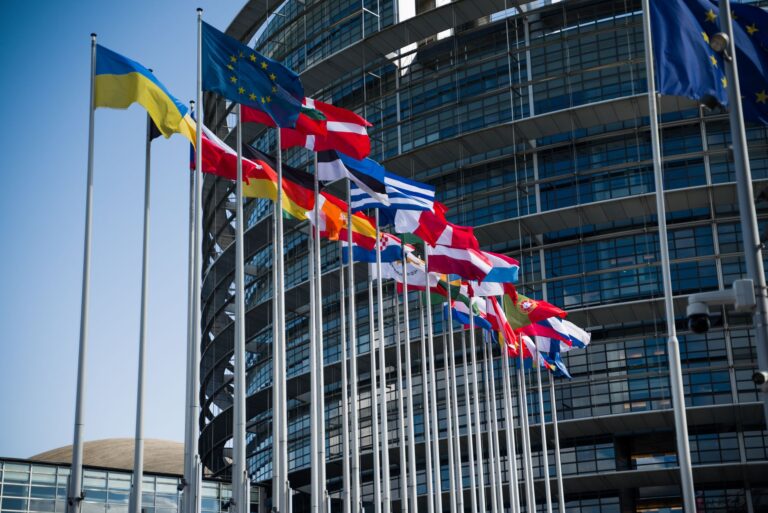
Sanctions stay, new money doesn’t: on the second day of the Brussels summit EU leaders gave Volodymyr Zelensky political backing but took no financing decision. The draft conclusions, updated on 14 October, say leaders “will revert to the issue in a timely manner” (Kyiv Independent). Status: Friday morning, 16 October.
Commission President Ursula von der Leyen said the EU will not lift any sanctions until Russia stops the war, and that a 22nd package is in preparation. Russia, she said, did not observe the energy ceasefire backed by US President Donald Trump “for a single minute”. European Council President António Costa said it was “time for peace”, not for continuing the war (Euronews, Radio Svoboda). Behind it is a row with Washington: Trump struck a diesel deal with Vladimir Putin that temporarily eases US sanctions, and called Ukraine’s refinery strikes a “disgrace”.
Who pays for the winter?
Estimates of the gap differ. Radio Svoboda cites an extra need of about €70 billion for 2027; Austrian Chancellor Christian Stocker spoke of a Ukrainian budget gap of roughly $27 billion (Euronews); Ukraine’s defence ministry reported a shortfall of about €23 billion in late August (Brussels Signal). They appear to cover different periods and items, so they cannot be compared directly. What is firm: the €90 billion loan for 2026–27 agreed in December 2025 is financed from the EU budget, not Russian assets, and was expected to cover roughly two-thirds of needs (Interfax-Ukraine).
The fight over frozen Russian central-bank money – between €185 and €210 billion depending on the source, most of it at Euroclear in Belgium – is not over. Denmark and Latvia want it used; Germany, Spain, the Netherlands and the Nordic and Baltic states are seen as supporters; Belgium blocks (Euronews). Leaders did agree on one thing: a US idea to put the assets under American control as a bargaining chip was rejected. Chancellor Friedrich Merz said on Thursday: “The assets are frozen in Europe, and they shall remain frozen in Europe.” Finnish Prime Minister Petteri Orpo called releasing them “completely out of the question” (Kyiv Independent).
Our assessment: a decision on the assets before agreement on the 2028–2034 EU budget looks unlikely, since the two are politically linked – Costa plans a revised compromise ahead of a special summit next month, and Ireland’s Micheál Martin wants a deal by year-end. More likely, the 2027 gap is first bridged by bringing forward existing funds and bilateral pledges; this is not certain.
Accession, Hungary, Starlink
Two more accession clusters opened this week; von der Leyen wants the remaining two opened by year-end, though the Commission notes slowing reforms. Hungary’s Prime Minister Péter Magyar was due to meet Zelensky bilaterally for the first time. Kyiv also faces a new worry: Reuters reports the White House ordered limits on Ukraine’s Starlink use (160 km/h cap for moving terminals), which is why Ukraine pushes European alternatives such as the FREYJA programme. EU foreign-policy chief Kaja Kallas expects a “really grave” winter.
Sources: European Council, Euronews, Radio Svoboda, Kyiv Independent, Interfax-Ukraine