Since the night of 13–14 October, Ukraine’s military has been unable to rely fully on Starlink once its equipment moves fast. Presidential adviser Serhii “Flash” Beskrestnov says SpaceX capped speeds on the military Starshield package at 160 km/h (100 mph) without warning. Who ordered it is still unclear as of 16 October.
The Kyiv Independent reports that mid-range strike drones and interceptor drones used against jet-powered Shaheds were hit hardest. A drone unit of the 7th Air Assault Corps in the Huliaipole sector cancelled missions. The Defence Ministry said SpaceX still maintains the limit of about 160 km/h, though the link is steadier below it. Reports differ on the threshold: Axios describes dropouts above 160 km/h and in some cases from 80 km/h; Newsweek cites outages of 10 to 20 seconds at roughly 110–120 km/h. On 15 October a ministry source told Reuters that connectivity had been restored, but the cap stayed.
Musk points to Washington, Washington to a glitch
There are three accounts. Elon Musk wrote on X that Starshield systems are owned and controlled by the US government, and that any limits on speed or usage are decided by the US military “and ultimately (the president)”. Starlink itself, he said, is a commercial service restricted to civilian or defensive use.
US officials told Axios it was a technical malfunction, and one senior official said the administration had nothing to do with the limits. Reuters, citing US and Western officials, reports otherwise: the order came from within the White House, and the Pentagon was told Starshield had to be slowed. Who issued it was not named; a senior US official denied it came from President Trump. Beskrestnov said the move “cannot be a coincidence” and is tied to the political situation, but offered no evidence. Poland’s foreign minister Radosław Sikorski asked Musk on X whether he was “playing politics” with his products again.
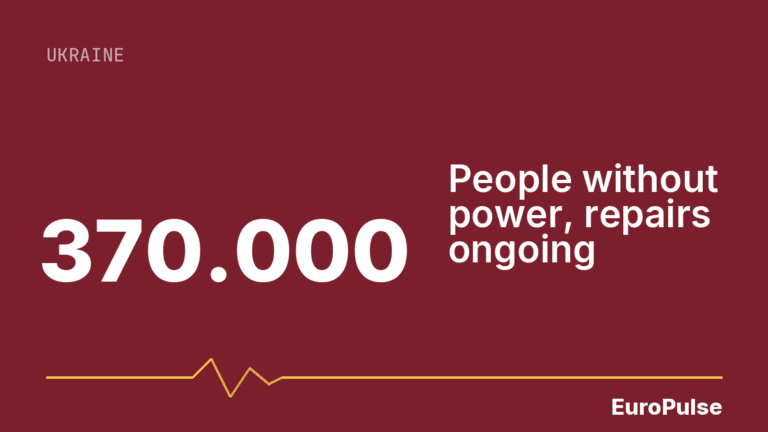
The timing is striking but proves nothing. On 11 October Trump unilaterally announced an energy truce; Russia kept striking Ukraine’s power grid. A diesel deal with Moscow followed, which Zelensky criticised. Ukraine says it received no early warning of a Russian missile strike just before the restriction; that night Russia launched 39 ballistic missiles and 128 drones, per Ukraine’s air force, leaving at least 600,000 people without power (Newsweek). Washington has also reportedly pressed Kyiv to stop hitting Russian refineries.
What remains even if the cap is lifted
Our assessment, with caution: the cap is most likely to be eased after talks — the Defence Ministry says it is negotiating “stable service conditions” with partners and SpaceX. The trust problem will stay. A core military capability depends on infrastructure that can be trimmed overnight, and Ukraine controls neither who decides nor for how long.
Three paths are plausible. The cap is lifted, the blame dispute lingers. It stays as leverage, and Kyiv must adapt its drones and tactics. Or Europe speeds up alternatives such as Eutelsat OneWeb or the planned EU system IRIS², though whether they can match Starlink for fast drones is an open question. In March 2025, Newsweek notes, Musk called Starlink “the backbone of the Ukrainian army” and promised never to use it as a bargaining chip. That is the yardstick his current stance will be measured against.
Sources: Kyiv Independent, Kyiv Independent / Reuters, Axios, Newsweek