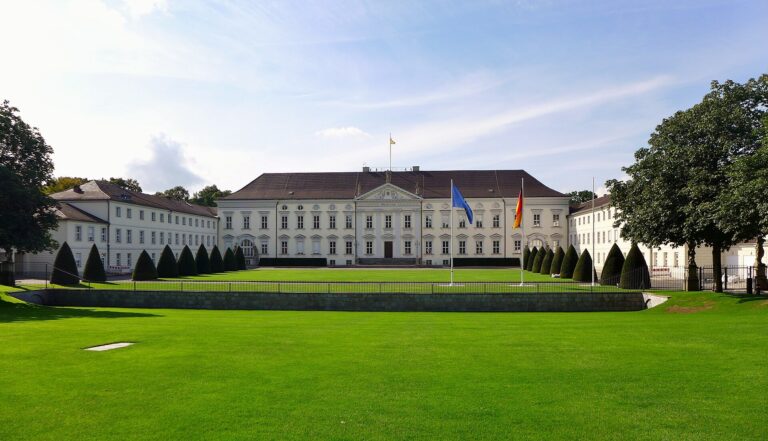
Chancellor Friedrich Merz has committed himself on who should succeed Federal President Frank-Walter Steinmeier: it must be a woman. At a closed conference of CDU district chairs in Berlin he said, according to participants quoted by dpa: “I am committed on the question that it has to be a woman.” He added: “I will propose a joint candidate to the party.” He named no one; the candidate is to come from the “political centre”, according to reports.
The timetable is tight. The Federal Convention meets on 30 January 2027, Steinmeier’s term ends in March 2027, and Article 54 of the Basic Law rules out a further re-election. According to Stern, quoted by t-online, Merz wants to make his proposal as early as next week, with a CDU committee possibly taking a preliminary decision on Monday. Talks with the CDU state chairs and the CSU would follow.
That is where the friction lies. The CSU wants Ilse Aigner, president of the Bavarian state parliament. CSU leader Markus Söder said in an ARD interview this summer that his party had settled on a woman, and he backed Aigner. Merz, however, insists that the CDU, as the strongest force in the Federal Convention, holds the right to propose. Other names in circulation include Bundestag President Julia Klöckner, federal minister Karin Prien, Annegret Kramp-Karrenbauer and Ines Claus. Men such as Boris Rhein, Stephan Harbarth and Udo Di Fabio are now considered unlikely, t-online reports.
The arithmetic: the Federal Convention has 1,260 members, 630 Bundestag deputies and an equal number of electors sent by the state parliaments. The first two rounds require an absolute majority of members; in the third, a plurality is enough. The Union and the SPD together have roughly 50 votes more than they need, t-online reports. That is a cushion, not a guarantee: this year’s state elections may have shifted the state delegations, and the ballot is secret.
Our reading, with due caution: Merz fixes the gender first and the name afterwards. That narrows the field and puts pressure on the CSU without forcing him to reject its candidate. The most likely outcome is agreement on a Union candidate acceptable to the SPD and the Greens; t-online says Merz wants the Greens involved in the search. A clash with Munich is possible but not inevitable, since Söder has himself pledged “a woman” and will find it hard to argue against any other. A surprise from outside party politics also remains conceivable: CDU general secretary Carsten Linnemann said in spring he was open to a non-politician.
The office carries no executive power, but it sets the tone of the republic: the president signs laws, appoints ministers and speaks in crises. A first woman in the role would be more than a personnel decision.
Names and dates rest on media reports of a closed meeting; no official confirmation has been given.
Sources: t-online (dpa), Basic Law, Art. 54, ZDFheute, Nordkurier, ad-hoc-news