Kyrylo Budanov, head of the Presidential Office in Kyiv, has to pay a fine for speaking Russian in an official capacity. Ukraine’s state language commissioner, Olena Ivanovska, announced it on Facebook on Saturday: the breach was acknowledged “without attempts to find a justification”, and the fine will be paid on time.
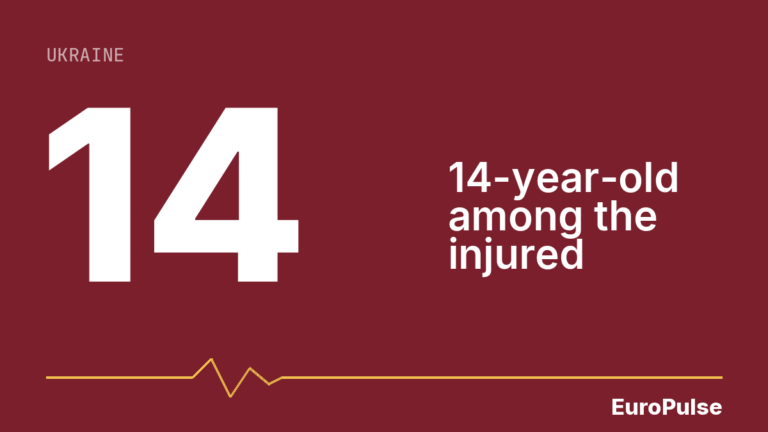
The trigger was Monday, 2 November, in Petropavlivska Borshchahivka near Kyiv. Several hundred people gathered outside a building housing National Guard servicemen after unverified online claims that men were being held and abused in the basement. The Azov corps of the National Guard said those inside were mobilised soldiers and men who had left their units without permission and were awaiting reassignment. The crowd damaged a National Guard bus and a police car. Budanov tried to calm things down; video shows him speaking partly Ukrainian, partly Russian to an injured 14-year-old, and dpa reports he also spoke to the boy’s sister on the phone in Russian.
Where private speech ends
Ukraine’s language law obliges officials to use Ukrainian when carrying out their duties; in private they can speak as they like. The grey zone is a politician improvising with residents in the middle of a crisis.
Ivanovska did not give the amount, and reports differ. Focus says up to 6,800 hryvnias, dpa 3,400 to 8,500, and Gordon gives 3,400–5,100 for a first offence and 8,500–11,900 for a repeat. At current rates that is roughly €70 to €250. The signal matters more than the sum: on 1 September Ivanovska had said Russian in school parent chats could also cost up to 11,900 hryvnias, and a case at the top of the state makes it harder to argue the rules only bite teachers and small businesses.
She also warned against pile-ons: the law exists “to work, not to split society”, and mistakes should be corrected legally, not by “lynching on social media”. Critics online accused Budanov of speaking the enemy’s language; dpa notes he is widely seen as a hero for his intelligence work.
Daily life is mixed. The Kyiv International Institute of Sociology found in early 2025 that 63% of Ukrainians mostly speak Ukrainian at home, 13% Russian and 19% both equally. In the east 29% and in the south 39% now speak mainly Ukrainian, up sharply since 2020. An online poll by Slovo i Dilo in late September 2026 (1,200 internet users, not representative of offline Ukraine) found 54.5% back mandatory Ukrainian in schools and 33.5% opposed, most often fearing conflict.
Our assessment: legally the case is small, politically it is not. Budanov will most likely pay and the row will fade within days; the open question is whether the commissioner will allow exceptions for spontaneous crisis conversations or tighten the line. For Russian-speaking Ukrainians in Germany nothing changes: Ukrainian language law does not apply here, and German is what counts at the Jobcenter or immigration office. As a gauge of mood back home, where many families use both languages, the debate still matters.
Sources: Ukraine’s State Language Law (Verkhovna Rada), Gordon, Focus, dpa, Ukrainska Pravda (KIIS)