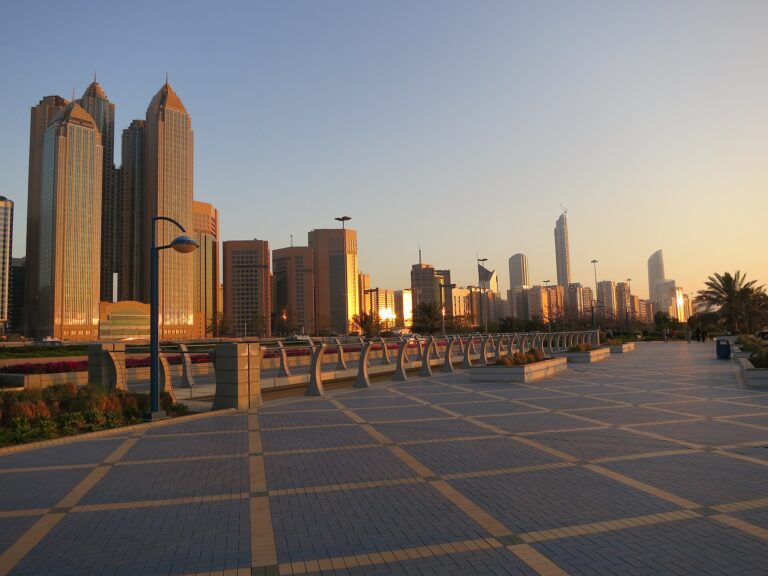
On Tuesday the next round of talks on ending the war in Ukraine opens in Abu Dhabi, and for the first time Europe says it will be more than a spectator. French Foreign Minister Jean-Noël Barrot told RTL radio on Sunday: “The Europeans will be well represented; France will be in Abu Dhabi to take part in these discussions.” He did not say who would go, and made clear he would not sit at the negotiating table himself.
US envoy Steve Witkoff has scheduled the round for 10–11 November, under American mediation between Ukrainian and Russian delegations. According to Witkoff, the agenda covers ending the war, post-war security arrangements and de-escalation. Reports so far name only France among the Europeans; Berlin does not appear in the announcements at all.
Why Paris is speaking up now
The trigger was a remark by Donald Trump. After meeting Russian envoy Kirill Dmitriev, the US president predicted a “major agreement” with Russia on Ukraine, without giving details. Barrot said he did not know what Trump had in mind, but argued that no deal with consequences for European security can be drawn up or discussed without Europe. Europeans, he said, have made that clear to the American mediators.
Kyiv agrees. On 28 October President Volodymyr Zelensky said Ukraine would not walk away from the three-way talks even if Washington insists on holding them without Europeans, but that he wants them involved. On 4 November he spoke for 90 minutes with Witkoff and Jared Kushner; the presidential office says they discussed “truly cast-iron” post-war security guarantees and air defence. Kyrylo Budanov, head of the presidential office, is on the Ukrainian delegation and, according to LIGA.net, said the talks “will not be final”.
Behind the diplomatic question lies a material one. Zelensky says Ukraine received only 24 Patriot interceptors from the US in 90 days against a need of about 350 a month. During his 3 November visit to Berlin he said, as UNN reported, that Ukraine needs an extra €70 billion from Europeans next year. Whoever pays such bills wants a say in the terms, which is Barrot’s real argument.
What a seat at the table is worth
Our assessment: a French envoy in Abu Dhabi is a signal, not yet influence. Barrot speaks of taking part in the “discussions”, not of being a party to the negotiations. The likeliest format is observer or consultation status, in which Europeans are briefed and feed in positions but sign nothing. That would still be a win for Paris, partly for domestic reasons: ahead of the 2027 presidential election Barrot is attacking Jean-Luc Mélenchon over his idea of a referendum on the Donbas, while Marine Le Pen says she would end French aid to Ukraine, estimated at €6 billion a year.
The next chance to show a united front is close. According to UNN, a “coalition of the willing” meeting of about 35 countries is planned in Berlin around the APEC summit on 18–19 November. Whether it produces an agreed line on security guarantees and financing is likelier to depend on what comes out of Abu Dhabi than the other way round. Judging by current signals we do not expect a quick breakthrough; Budanov himself is lowering expectations.
For Ukrainians in Germany, this round changes nothing in the short term: protection status is not decided at a negotiating table in Abu Dhabi. What matters more is what the talks eventually say about security guarantees and reconstruction, and who pays.
Sources: Euronews, Cyprus Mail, LIGA.net, President of Ukraine, Kyiv Post, UNN