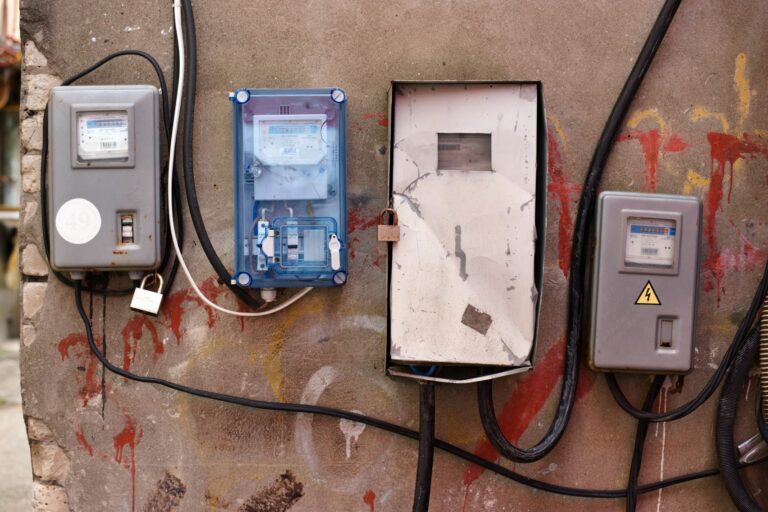
Whether households pay less electricity tax in 2027 will be settled on Thursday, when the Bundestag budget committee holds its final adjustment session on the 2027 budget. According to a Spiegel report on Wednesday evening, the government does not intend to cut the tax for private households “for now”; we could not confirm this officially by press time. Earlier in the day, dpa still described the outcome as open and the financing as unresolved. (As of 11 November, 21:00 CET)
How much money is at stake?
Under section 3 of the Electricity Tax Act, the tax is €20.50 per megawatt hour, or 2.05 cents per kilowatt hour. The EU minimum is 0.1 cents. Cutting to that floor would save 1.95 cents before VAT, about 2.3 cents with it. Verivox’s model calculation gives these annual savings:
- 2,000 kWh: about €46
- 3,500 kWh: about €81
- 5,000 kWh: about €116
The taz puts the gain at four to eight euros a month. Chancellor Friedrich Merz has said a cut for everyone would cost the federal budget roughly €5 billion a year; other estimates go up to €6 billion. Manufacturing, agriculture and forestry have been relieved since 2026. The coalition agreement promises a cut for all, but as far back as July 2025 the coalition committee postponed it until “financial room exists”, ZDFheute reported at the time.
Why is it stuck right now?
Merz made the cut a visible relief measure after the AfD’s strong result in Saxony-Anhalt, the taz writes. Finance Minister Lars Klingbeil (SPD) sees no room without offsetting financing. By his calculation, the €4.1 billion of extra revenue forecast in the tax estimate is eaten up by a lower permitted level of new borrowing (about €2.5 billion) and the planned income tax reform (about €1.7 billion). The CDU/CSU also wants compensation for bracket creep, and the sugar tax has not yet taken shape, dpa-AFX reports.
Thuringia’s Minister-President Mario Voigt (CDU) again demanded the cut for all on Wednesday: “Our families and our small and mid-sized businesses finally need cheaper energy prices.” Suggested sources of money include a surplus in the renewable-energy account, a windfall tax on oil companies and savings in the Climate and Transformation Fund.
Our assessment, with moderate confidence: the likeliest outcome is a compromise that keeps the cut as a goal but leaves its start date or scope open. A cut for everyone from January is only plausible if the coalition finds solid financing on Thursday. A third path is another postponement. For tenants with their own electricity contract, including many Ukrainian households, the sum is a little over six euros a month; the next bill will not change for now.
Sources: taz, dpa-AFX, dpa/Volksstimme, Stromsteuergesetz § 3, ZDFheute