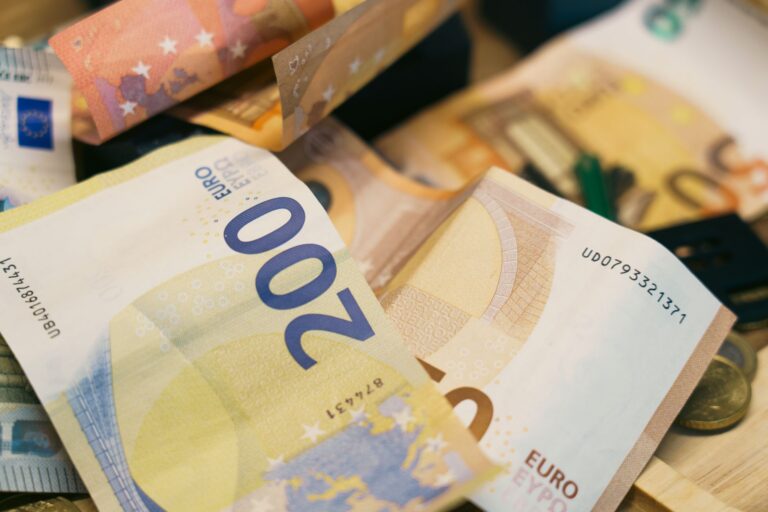
The European Commission paid Ukraine €7.9 billion on Friday – the ninth and so far largest tranche under the Ukraine Facility. The money is intended to secure the country’s financial needs and the work of the state administration in wartime, as the Commission announced and Ukrinform and Yevropeiska Pravda report. Ukrainian Prime Minister Serhii Koretskyi said the funds had already arrived in the state budget.
“Ukraine continues to implement reforms and defends itself day after day. Today we are paying out almost €8 billion – the largest payment made so far,” said European Commission President Ursula von der Leyen. “This clearly shows: real progress on reforms brings real results and benefits. As Ukraine steadily advances on its European path, it can count on our support.”
With this payment, total EU support under the Ukraine Plan reaches €40 billion according to the Commission – including external contributions from member states and partner countries as well as funds from the Ukraine Support Loan since mid-2024. Around €5.1 billion of the current tranche comes from this loan; more than €5.9 billion has so far flowed through this component. Yevropeiska Pravda puts the share from the loan for 2026 at around €5 billion.
16 reform steps as a condition
The payment was made possible because, in the Commission’s assessment, Ukraine successfully implemented 16 reform and investment steps tied to the ninth tranche. In addition, there was one outstanding reform step from the fourth tranche, three from the seventh, one from the eighth and one step postponed from the tenth tranche; another step from the ninth tranche was assessed as partially fulfilled. The areas range from justice, combating corruption and money laundering, financial markets and state asset management to energy, the agricultural market, digital transformation and the green transition.
In addition, according to the Commission, Ukraine mobilised public investments totalling €948 million, for example in education, health, housing and the clearance of agricultural land of mines. Around €451 million of this went to the needs of reconstruction, renovation and modernisation at regional and local level.
Koretskyi called the funds “vital support to maintain financial stability and meet the priority needs of the state under the conditions of the full-scale war”.
€15.7 billion remain available until the end of the year
According to the Commission, €15.7 billion in EU financial assistance will remain available to Ukraine until the end of 2026. This includes slightly more than €14 billion from the Ukraine Support Loan – €10.2 billion to strengthen Ukraine’s defence-industrial potential and €3.9 billion in budget support. In addition, just under €1.6 billion in budget support will remain available this year under the original Ukraine Facility programme. Release in each case depends on fulfilment of the conditions set out in the Ukraine Plan and the Memorandum of Understanding.
The Ukraine Facility is the EU’s central financial instrument for Ukraine. It entered into force on 1 March 2024 and provides for more than €50 billion in grants and loans for 2024 to 2027, excluding external contributions from member states and partner countries. Sweden and Norway have already made voluntary additional contributions to the Ukrainian investment framework.
The payment comes amid a strained budget situation: according to the Berliner Zeitung, citing the Kyiv Independent, the deficit has recently grown, partly because a Russian blockade in the Black Sea weighs on tax revenues and the war forces higher spending on personnel, weapons production and defence measures against Russian drones and missiles.
The payment is the latest step in a whole series: according to Yevropeiska Pravda, the Commission had already transferred a tranche of €2.9 billion under the Facility on 2 October. In mid-November, according to the Berliner Zeitung, the Council of the EU decided to release the almost €8 billion; the Prime Minister said at the time that the tranche would be paid out “shortly”.
Editorial assessment: For Kyiv, the punctual payment before winter is more than an accounting item – it helps decide whether wages, pensions and administration can be carried through the coming months. Brussels, in turn, ties the money to reforms, whose pace thus becomes the yardstick for further billions.