If you turn up the radiator this week and the flat stays chilly, you have more rights than many tenants realise. The German Tenants’ Association (Deutscher Mieterbund, DMB) and the Berliner Mieterverein (BMV) issued similar guidance at the start of the heating season – and both stress how much documentation matters.
The minimum your landlord owes you
According to the DMB, landlords must switch the heating on by 1 October at the latest. During the day – roughly 6am to 11pm or midnight, as the DMB and BMV differ by an hour – living rooms should be able to reach 20 to 22°C, and about 18°C at night. If the flat only reaches 16 to 18°C, the DMB considers a rent reduction of 20 to 30 per cent possible. That is a guide rather than an automatic entitlement; in a dispute, courts judge each case on its facts.
The reverse also holds: tenants are not obliged to heat to 20 or 22°C. Being away or saving at weekends is not a breach of contract, as long as rooms do not cool so far that mould or damage results. DMB director Florian Becker said in the 1 October statement: “Nobody should put up with a permanently cold flat out of worry about high heating costs.”
In practice: if the heating fails or the flat won’t warm up, tell the landlord at once, ideally in writing, and log temperatures with date and time. If there is no response, a local tenants’ association can advise – in Munich, the Mieterverein München.
What the winter may cost
The BMV cites the co2online Heizspiegel: heating a 70-square-metre flat in an apartment block cost about €1,180 with gas in 2025, €1,245 with district heating, €1,055 with heating oil and €715 with a heat pump. For 2026 it depends on the fuel: according to an Aroundhome report of 29 September based on the same Heizspiegel (about 67,000 buildings), oil and wood pellets are getting markedly dearer – by around 24 and 20 per cent – while gas comes out slightly cheaper at about €1,120 (down 4 per cent). “The fall in gas costs is unlikely to last,” the report says. Figures differ slightly between reproductions; we could not view the original Heizspiegel.
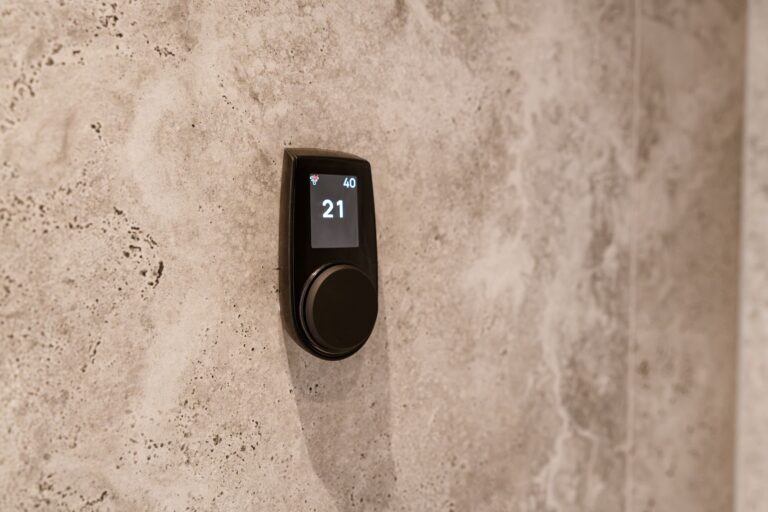
What you can control: co2online calculates that each degree less saves around 6 per cent of heating energy. About 20°C is enough for living rooms and children’s rooms; bedrooms and hallways can be cooler. On a standard thermostat, setting 3 is roughly 20°C; setting 5 doesn’t heat faster, only higher. The advice is to air fully three or four times a day rather than leaving windows tilted, keep radiators clear, and close shutters or curtains at night.
Those who receive or may qualify for housing benefit (Wohngeld) should keep an eye on planned cuts – see our overview of Wohngeld 2027. We covered the planned gas-reserve levy here.
District heating, back payments, faulty bills
With district heating, tenants are not party to the contract and cannot switch supplier. The BMV advises checking the bill against current usage and basic prices and last year’s consumption. If in doubt, pay any back payment only in writing “under reservation” (“unter Vorbehalt”) and ask to inspect the records. BMV managing director Sebastian Bartels warns: “It has repeatedly been shown that price-adjustment clauses in particular are a gateway for sometimes deliberate miscalculations.”
Our assessment, with due caution: for 2026/27, back payments look likeliest for oil and pellet heating; for gas much depends on prices over the winter. Checking your advance payments now and turning the heating down sensibly – not to zero – is the best way to avoid the nastiest surprise in spring.
Sources: Deutscher Mieterbund, Berliner Mieterverein, co2online, Aroundhome