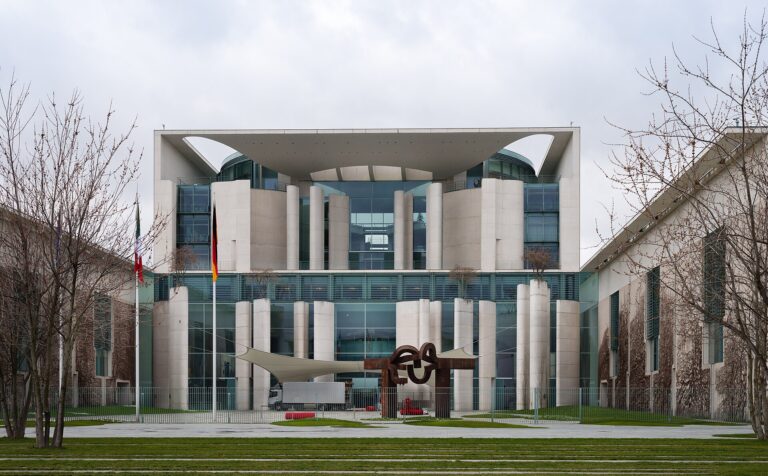
Berlin has spelled out the terms on which Chancellor Friedrich Merz would speak to Vladimir Putin. “A conversation for the sake of a conversation makes no sense,” deputy government spokesman Steffen Meyer said on Monday. Germany is open to talks in principle, he said, but only with a sound basis, clear goals and a degree of parity between the sides. It will not take part in “sham talks”. No call or meeting is planned.
The trigger was a remark by Merz at a Westfalenpost event over the weekend: a German chancellor has to talk to Putin “at some point”, perhaps at the G20 summit in Miami in mid-December, after careful preparation (as reported by the dts news agency). Meyer’s clarification was clearly meant to lower expectations.
A change of course, or just of tone?
In February Merz was sceptical of direct talks between European leaders and the Kremlin and rejected “parallel” channels, pointing to Viktor Orbán’s Moscow trip, which was followed by heavy strikes on Kyiv. On 3 November, standing next to Volodymyr Zelensky in Berlin, he said Russia must negotiate seriously on a ceasefire and peace: “I do not see that so far.”
Since then it is the frame that has shifted rather than Berlin’s position. The US has invited Russia to the G20 summit on 14–15 December in Miami; Finance Minister Lars Klingbeil called that an “attempt at normalisation” back in September. In Abu Dhabi, adviser-level talks begin on 10 November; according to Al Jazeera they involve a Russian delegation led by Vladimir Medinsky, Ukraine and the US. Reports differ on whether Europeans are at the table: Ukrinform says Merz’s adviser Günter Sautter will represent Germany, while Al Jazeera says the Europeans will meet US envoys in Brussels instead.
What Berlin really wants
In our assessment, two interests lie behind the formula. First, Germany does not want to be the channel through which Moscow drives a wedge between Europe and Kyiv and Washington – hence the stress on goals and parity. Second, the government does not want to watch from the sidelines in Miami while others discuss European security. According to government spokesman Stefan Kornelius, Berlin and Washington have agreed four principles: the war ends before talks on the European security order begin; any deal must be part of a comprehensive settlement; NATO partners must reach consensus; and Europe takes part in negotiations on its own security.
Whether a conversation happens in December depends less on Merz than on Moscow: as long as the Kremlin shows no readiness for a ceasefire, the “makes sense” condition stays unmet. We think a Merz–Putin phone call before Miami is unlikely, and a meeting on the summit’s margins plausible only in a coordinated format with Zelensky – with low confidence, since the Kremlin has not confirmed Putin’s attendance.
Sources: Bundesregierung, Berlin Story (dts), Ukrinform, Al Jazeera, Berliner Zeitung