Ukraine has received US weapons worth 10 billion dollars through the NATO programme PURL. This was stated by Admiral Giuseppe Cavo Dragone, Chair of the NATO Military Committee, in an interview with Ukrinform. “The PURL mechanism works. It is the fastest, I believe. It started in July last year, and now it is running very well, fast,” said Dragone. Ukraine receives what it needs, “on the basis of its requests and priorities and in the fastest way”.
Dragone stressed that PURL is not the only instrument. In total, the Alliance has provided Ukraine with assistance worth 70 billion dollars in 2026 and pledged a further 70 billion dollars for 2027. “They [Ukraine’s partners] are motivated. We think they will be successful. And so, with your actions on the battlefield – I say it again, the deep strikes – and also with the fact that Ukraine has been able to hold the front line, there are no territorial gains,” the admiral said.
On 6 October, a delegation of the NATO Military Committee led by Dragone visited Kyiv. There it spoke with the leadership of the General Staff of the Ukrainian Armed Forces about the situation at the front and further support for Ukraine.
How NATO is planning its assistance for 2027
The 70 billion dollars for 2027 mentioned by Dragone are part of an ongoing debate. As early as June 2026, zn.ua, citing Politico and four NATO diplomats, reported that the Alliance was examining a new financial pledge package of 70 billion euros for military purposes. The announcement was to be made, if decided, at the NATO summit in Ankara in July. The proposal, introduced by Germany the previous month, envisaged a new mechanism for greater transparency in the financing of Ukraine. The background was complaints from some countries that they were spending disproportionately much on supporting Kyiv.
A senior NATO diplomat said at the time: “The key is to get a firm commitment from Ankara to continue providing Ukraine with vital support on a sustainable and fairer basis.” The debate about increased support gained urgency because many experts argued that Kyiv was shifting the balance of power in the war in its favour. Under Donald Trump’s presidency, the US halted almost all new military aid for Ukraine and now only sells Kyiv weapons that are financed by other allies. According to a report published by the Kiel Institute on 4 June, European countries provided 2 billion euros in military aid per month from January to April – significantly less than the 2.4 billion euros per month in the same period in 2025. No US military aid was recorded in that period.
Support for Ukraine was to be one of the core topics at the NATO summit of heads of state and government on 7 and 8 July. A NATO representative told Politico: “There are discussions about how we continue NATO’s strong support for Ukraine and ensure a fairer burden-sharing.” Ukraine’s Ambassador to NATO, Alona Hetmanschuk, demanded that new pledges must focus on Kyiv’s priorities: air defence, investment in the production of drones and missiles, and longer-range ammunition. “As long as Ukraine does not receive effective security guarantees, we can only rely on the financial guarantees of our partners,” she said.
After the allies had rejected NATO Secretary General Mark Rutte’s proposal the previous month to provide 0.25 per cent of GDP for Ukraine aid, they were now examining the German initiative. According to three diplomats, however, the talks were at an early stage. The meeting of NATO defence ministers later in the month offered the possibility of an agreement. The new financial target was not to consist exclusively of new funds. According to two NATO diplomats, 30 billion euros were to come from the already agreed two-year EU loan for Ukraine of 90 billion euros, and a further 40 billion euros from bilateral pledges. A sixth senior NATO diplomat said: “That is natural, considering that most NATO allies are also EU members. It would be unfair to demand a double contribution from them.”
However, there were fears that countries might believe they had to make fewer contributions of their own if they could count on EU funds. Sweden’s Foreign Minister Maria Malmer Stenergard said in an interview with Politico at the end of the previous month: “Now it is important that, above all, European countries do not see this 90 billion euro loan as a substitute for bilateral support. Adding bilateral support to this loan is absolutely crucial.”
Germany as a “lion’s share” supporter
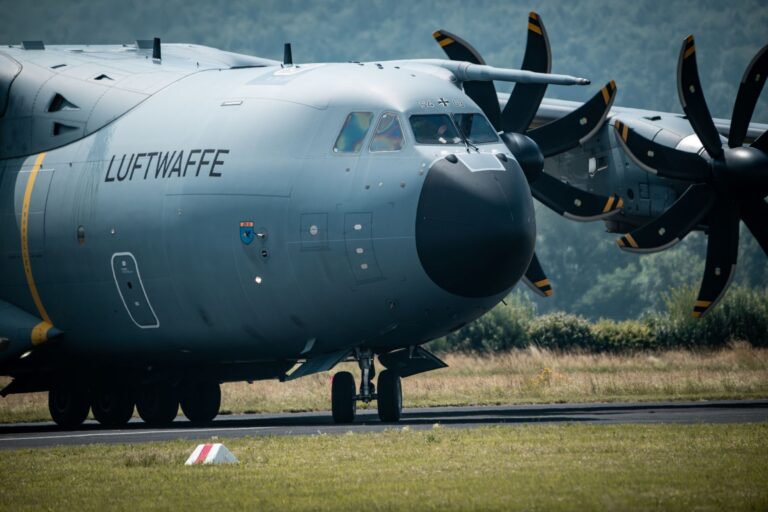
Germany’s role remains central. During NATO Secretary General Rutte’s visit to Berlin on 10 September 2026, Foreign Minister Johann Wadephul (CDU) said at the ambassadors’ conference: “We must not harbour any illusions.” Russia is threatening NATO not only militarily on the eastern flank and is continuing its war against Ukraine. “We are seeing more and more hybrid attacks, cyberattacks, activities, sabotage, disinformation and attacks on critical infrastructure.” A stronger Europe also makes NATO stronger. “In the end, it is about credible deterrence.” Wadephul stressed that Germany, together with Canada, was taking on the “lion’s share” of military support. Ukraine continues to need air defence capabilities; only last week Germany pledged additional Patriot air defence missiles.
Rutte praised Germany’s response to the attempted drone attack on Leipzig/Halle Airport in early August by Russia. Moscow is trying to prevent NATO from supporting Ukraine. Russia’s actions are a sign of its weakness and a symptom of its failure in Ukraine, said Rutte. Germany is Ukraine’s strongest supporter. To secure NATO’s eastern flank, Germany has stationed an armoured brigade in Lithuania. By the end of 2027, 4,800 soldiers and 200 civilian staff are to be stationed there.
For people in Germany, this means: the federal government continues to commit considerable funds and personnel to supporting Ukraine and NATO’s eastern flank. Whether the planned 70 billion euro pledge will materialise will, based on the consultations so far, be decided at the earliest at the summit in Ankara – the sources did not give an exact date. One thing is clear: PURL is running, but the financing beyond that is still open.