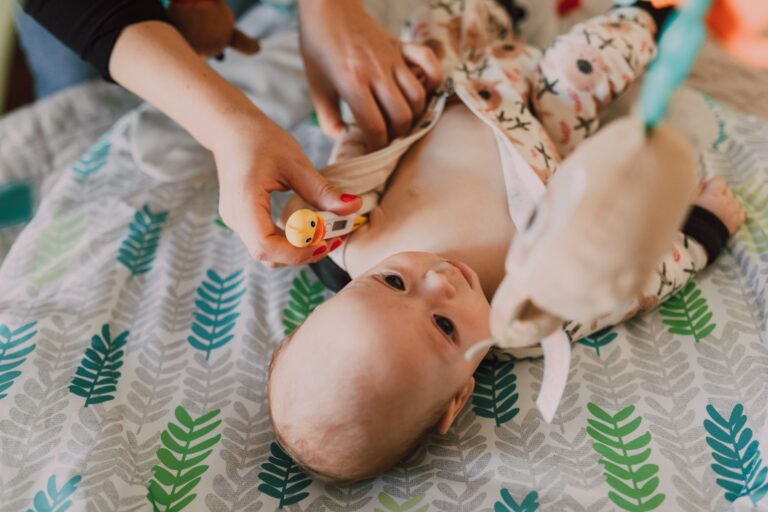
Fever at six in the morning, nursery closed, a boss on the phone: parents of children under twelve know the scene. For days like these, Germany’s statutory health insurers pay Kinderkrankengeld, a sick-child benefit. From 2027 the number of paid days is likely to shrink.
The limit sits in two paragraphs of the law. Under section 45(2a) of Book V of the Social Code, up to 15 working days per child and parent apply only “in the calendar year 2026”. When that exception lapses, paragraph 2 returns with ten days. The comparison:
| Case | 2026 | From 2027 (if no new law) |
|---|---|---|
| One child, each parent | 15 working days | 10 working days |
| One child, single parent | 30 | 20 |
| Several children, per parent a year | max. 35 | max. 25 |
| Several children, single parent | max. 70 | max. 50 |
What is settled and what is not
Health Minister Carsten Linnemann (CDU) rejected a further extension in the Bundestag’s question time on 23 September. “That is a rule we introduced during Covid,” he said, according to dpa-afx. He insisted nothing is being abolished: “It will be 10 days, times two is 20 days a year.” That sum holds for a couple sharing the days; single parents get 20 days per child.
The SPD objects. Manuela Schwesig, Minister-President of Mecklenburg-Western Pomerania, told reporters, as quoted by Deutsches Ärzteblatt: “That is out of the question.” Thuringia’s health minister Katharina Schenk points out that last year a sickness case averaged just 2.5 days. Savings are reportedly estimated at around €100 million.
We have found no passed law either extending or cutting the days; according to Personalwirtschaft it is unclear whether and when the plans reach parliament. Our assessment: the outcome is open, as the CDU/CSU and SPD are bargaining over statutory health-insurance finances. If you are planning leave, home-working and childcare for 2027, assume ten days for safety — that is the legal position if nothing happens.
How to claim
You qualify if you are in the statutory scheme with a sick-pay entitlement, your child is under twelve (no age limit if disabled and dependent on help), nobody else in the household can care for them and a doctor certifies it. Privately insured parents are excluded. The insurer pays 90% of lost net pay, or 100% if you received one-off payments in the past twelve months; the daily cap in 2026 is €135.63.
In practice: tell your employer at once, ask the paediatrician for a certificate and send it to your insurer. If the practice knows your child, it may also issue a certificate by phone for up to five calendar days, though there is no legal right to this. The certificate arrives by post and doubles as your application.
Paid leave under section 616 of the Civil Code often comes first, unless your contract excludes it; it counts towards the limit. If you are unemployed, ask the Agentur für Arbeit.
Sources: Section 45 SGB V, Deutsches Ärzteblatt, t-online (dpa-afx), Personalwirtschaft, Techniker Krankenkasse