Ukraine’s major energy companies have called on their international partners in a joint statement to significantly expand and speed up aid to the country before winter. As the news agency Ukrinform reported on Wednesday, 21 October, the document comes from the Naftogaz group, the grid operator Ukrenergo, the nuclear company Energoatom, the operator of Ukraine’s gas systems and the hydropower operator Ukrhydroenergo.
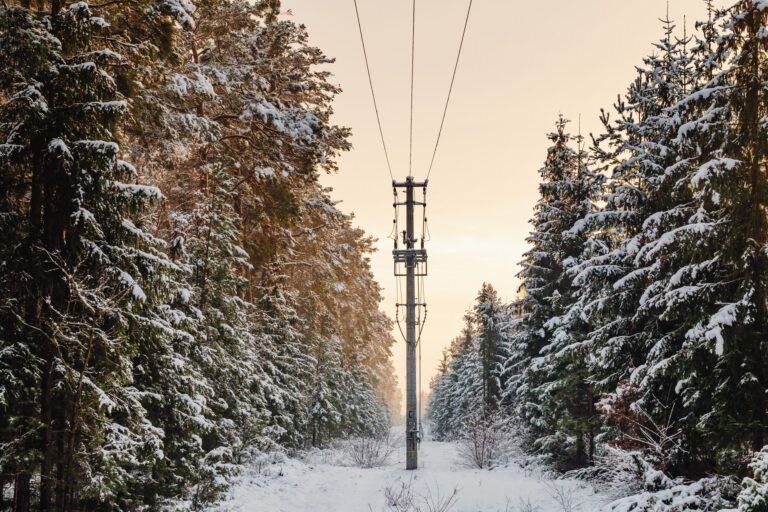
In it, the companies stress that Russia is continuing its systematic attacks on Ukraine’s electricity generation and transmission infrastructure, on facilities for gas extraction, storage and gas transmission, and on heat supply systems. These attacks also endanger nuclear and radiation safety, because a reliable external power supply is essential for the safe operation of Ukraine’s nuclear power plants. According to the energy workers’ assessment, the coming winter could be one of the hardest since the start of the full-scale invasion.
“However, the fact that the Ukrainian energy system is still functioning does not mean that it is safe. Every new attack worsens the destruction and increases the burden on equipment, personnel and financial resources,” the statement says.
Repair work alone, the companies continue, cannot endlessly offset the consequences of systematic destruction. At the same time, energy security is not limited to national borders: protecting Ukraine’s energy infrastructure strengthens Europe’s shared security.
Five demands to the partners
In the document, the companies name five priority areas in which they are seeking support. First comes the protection of critical energy infrastructure through strengthened air defence and physical protection – explicitly including the facilities that are important for nuclear and radiation safety. Second, they call for faster emergency aid in the financing, delivery and connection of equipment. Third, the partners should ensure possibilities for gas and electricity imports in winter. Fourth, the aim is to mobilise grants, preferential loans, guarantees and war-risk insurance for urgent repairs and investment. Fifth, the energy companies demand tougher sanctions against Russia, in particular against its oil and gas sector.
“The scale and speed of international aid must match the scale and speed of Russian attacks and the urgency of Ukraine’s needs,” the statement continues.
At the same time, the signatories thank governments, international organisations, financial institutions and private partners whose support has helped to keep the Ukrainian energy system running.
How vulnerable is the grid still?
The warning comes at a time of intensified Russian air strikes. In its report, Ukrinform notes that since the night of 20 October Russia has been continuously attacking energy facilities, the railway, shopping centres and residential buildings in Ukraine. The Austrian newspaper Die Presse described on Sunday, 18 October, citing the energy think tank DiXi Group, that the Russian winter campaign had already begun: since the end of September attacks on energy infrastructure have been increasing; in September Russia deployed more than 6,300 long-range drones against Ukraine, 30 per cent more than in August.
DiXi Group’s research director, Roman Nizovych, told the Presse that he considered a pessimistic scenario “very likely”: “Basically we are seeing a repeat of the situation in Kyiv at the end of January 2026, but on a larger scale. The Russians are deliberately maintaining the pressure in order to make life impossible, force people to flee and destabilise the situation.” On gas supply he was cautiously optimistic: “Our gas storage facilities are full, unlike those of the EU member states.” In August the government had expected to be able to increase available electricity capacity, including import possibilities, to 21.4 gigawatts by the end of the year – provided further Russian attacks do not cause significant damage.
What this means for Europe
DiXi Group president Olena Pavlenko referred to the Presse to the resilience plan adopted by the government, which calls on municipalities to take action: “This is a top-down measure. It transfers responsibility to communities and cities.” Cities are prepared to varying degrees; unlike Kyiv, Khmelnytskyi, Zhytomyr and several western Ukrainian cities are considered well equipped. However, restructuring the system would require more time than Ukraine has: “You cannot transform the entire system within six months. Six years would be more realistic.”
According to the Presse, the Vienna-based Energy Community pools international financial aid for Ukraine through its assistance fund; by the beginning of October, more than 2.4 billion euros had reportedly been pledged. Nizovych also warned that the European public should prepare for scenarios such as power outages or damaged substations; the Baltic states are already investing in additional protective measures for their energy facilities.
For people in Ukraine, the coming weeks are about heating, light and water. In their statement, the energy companies make clear that they will continue the repairs – but that, in their view, the pace and scale of international aid must keep up with the Russian attacks. Whether that succeeds will be decided before the first frost.