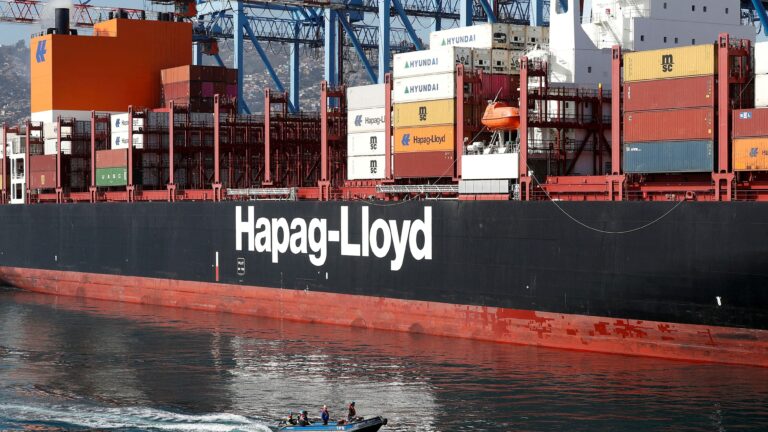
Hapag-Lloyd and CMA CGM Suspend Cuba Transport Due to US Sanctions

The shipping companies Hapag-Lloyd and CMA CGM have suspended all bookings to and from Cuba due to new US sanctions imposed on May 1.
Economic news on companies, work, consumer issues, markets and developments in Germany and Europe.

The shipping companies Hapag-Lloyd and CMA CGM have suspended all bookings to and from Cuba due to new US sanctions imposed on May 1.

Mobile phone prices in Europe vary significantly in 2026, with Poland offering the lowest rates between 5 and 9 euros.

The German government faces pressure to implement bold reforms to tackle economic challenges. According to Handelsblatt, a reform package with five key points could strengthen Germany's economic position.

The United States has decided to let the exception from sanctions on Russian oil expire amid rising energy prices influenced by the Iran war.

Wall Street begins testing Kevin Warsh ahead of his official start as head of the Federal Reserve, with U.S. bond yields rising sharply.

Transport Minister Patrick Schnieder is increasingly under fire as passenger representatives and public transport companies express dissatisfaction.

The Berlin Classic Days attract thousands of classic car enthusiasts to Kurfürstendamm, showcasing historic vehicles. Despite the climate crisis and rising fuel prices, the passion for classic cars remains unbroken, as reported by Zeit.

On Monday, Greek Deputy Prime Minister Kostis Hatzidakis arrives in Berlin to discuss Greece's economic successes. According to Handelsblatt, the gross domestic product (GDP) grew by 2.1 percent last year.

Under the leadership of Evelyn Palla, Deutsche Bahn aims to achieve profitability after years of losses.

Harvard economist Stefanie Stantcheva reveals that an increasing number of people view societal issues as a distribution battle, particularly among younger generations, influencing political discourse.

The U.S. government has launched an initiative to develop small modular reactors for commercial shipping, responding to pressure to reduce CO₂ emissions.

A looming strike at Samsung Electronics could exacerbate global semiconductor supply shortages and cost billions.

Inflation in Germany is approaching the three percent mark, prompting changes in consumer shopping habits. Many are cutting back on restaurant visits and mobility, according to Tagesschau.

Katherina Reiche, CEO of Westenergie AG, visited the PCK refinery in Schwedt, which produces e-kerosene. In an interview, she reflects on her childhood in the GDR and the current political situation in Germany.

Archion, the new truck manufacturer, plans to increase its profit margin to over ten percent and is focusing on strong growth.

The German economy shows a mixed picture under Chancellor Friedrich Merz (CDU) with low growth and rising prices. Despite unexpected growth in the first quarter of 2026, the outlook for the rest of the year is bleak.

Federal Justice Minister Stefanie Hubig aims to tackle inflated prices on the secondary ticket market following an open letter from artists and event companies.

The tank manufacturer KNDS aims to advance its IPO independently of the federal government.

A report reveals that consumers are silently accepting high food prices while drivers protest against gasoline costs. This discrepancy raises questions about societal reactions to price hikes.

The German government has lowered its growth forecast for 2026 to 0.5 percent due to rising energy prices stemming from the Middle East conflict.

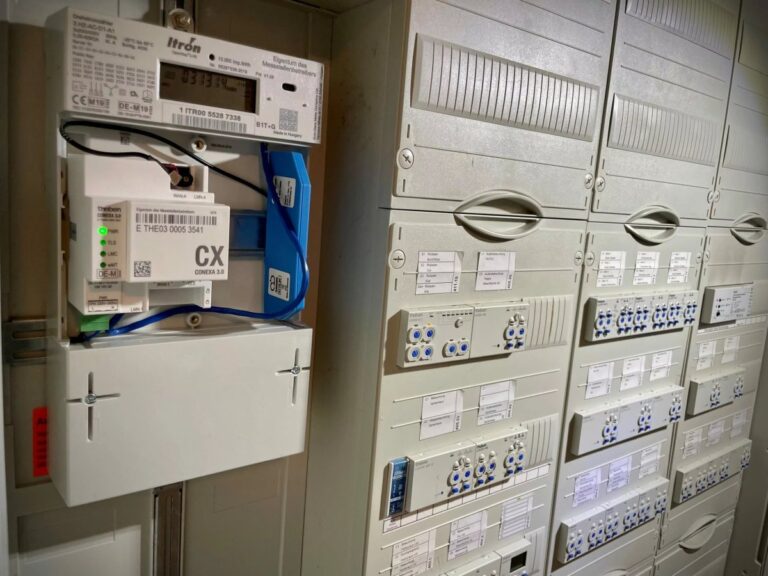
The energy transition poses challenges for businesses when self-generated electricity cannot be utilized.

Uniper has begun a test run to renovate the Loisach-Isar Canal to prevent water leaks using bentonite.

Growing opposition to data center construction in Germany threatens billion-euro projects and puts pressure on the industry.

The Dow Jones has surpassed the 50,000-point mark, while the S&P 500 and Nasdaq reach new records.

The UK economy unexpectedly grew by 0.3 percent in March 2026, surpassing economists' forecasts of a 0.2 percent contraction, according to The Guardian.

The inflation rate in Germany reached 2.9 percent in April 2023, marking the highest level in two years, driven by high fuel prices and rising energy costs.

The automotive sector warns of greater job losses than previously expected, with up to 225,000 positions at risk, primarily among suppliers.

The Horst Brandstätter Group, manufacturer of Playmobil, has reported a revenue decline to 409 million euros for the fiscal year 2024/2025, according to Tagesspiegel.

Eon has acquired the British provider Ovo and aims to become the market leader in the UK energy sector.

The German government aims to participate in the IPO of Leopard tank manufacturer KNDS, but disagreements have arisen.

Users of macOS are currently receiving malware warnings for older versions of ChatGPT and Codex due to a security incident at OpenAI.

The German government has approved a fuel discount package to reduce high fuel prices. According to BR, the discount of nearly 17 cents per liter will be granted for two months.

The German travel industry is facing weaker demand due to a kerosene shortage and rising inflation, as reported by Zeit.

According to Süddeutsche Zeitung, interest rates for daily and fixed deposits have significantly increased, allowing savers to benefit from offers exceeding three percent.

Oliver Zipse has departed from BMW amid shareholder dissatisfaction with his direction. His exit is overshadowed by technical issues during the virtual annual meeting, as reported by Elt.

The VinFast VF6 impresses with numerous extras but also has some weaknesses highlighted in the test report.

India's retail inflation rose to 3.48% in April 2023, driven by higher food prices and energy costs, as reported by Deutsche Welle.

The Deutsche Telekom and Google have reportedly ended their collaboration on a sovereign cloud for Germany. The project, launched in 2021, is now facing termination.

Oil prices are declining as Trump and Xi prepare to discuss key issues like Iran in China.

The Federal Government has passed a reform of the heating law that delays the gradual replacement of oil and gas boilers, allowing homeowners more choice.