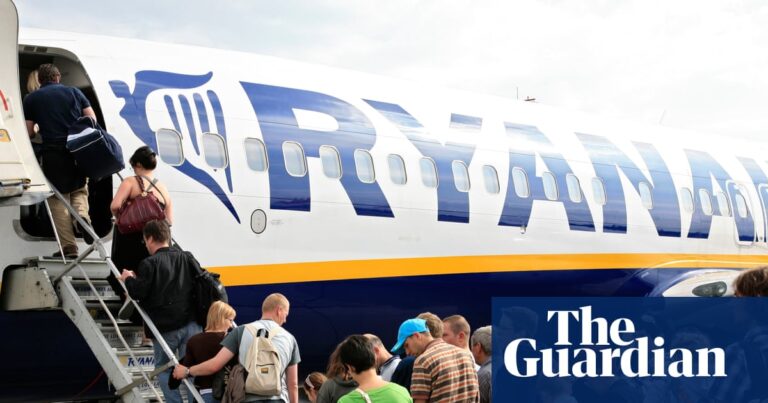
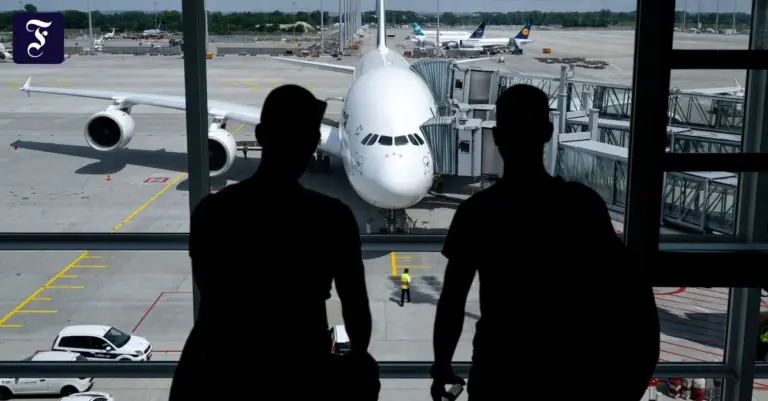
EU reform of air passenger rights faces collapse

The European Union is working on a reform of air passenger rights, but has yet to find a compromise. According to the FAZ, an agreement on compensation for delays is not in sight.
Economic news on companies, work, consumer issues, markets and developments in Germany and Europe.

The European Union is working on a reform of air passenger rights, but has yet to find a compromise. According to the FAZ, an agreement on compensation for delays is not in sight.

German homeowners' interest in solar panels had recently declined, but the Iran war and Minister Reiche are giving photovoltaics a special boom, as Tagesspiegel reports.

Germany's leading index DAX was trading higher on Wednesday. Contradictory statements about the Iran war have left markets unfazed so far, according to Handelsblatt.

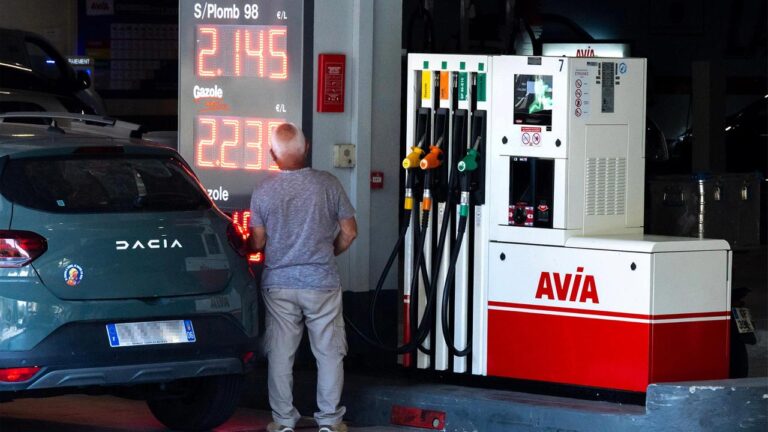
Inflation in the eurozone rose to 3.2 percent in May, driven by higher oil prices due to the Iran war, according to Tagesschau.

Contradictory statements on the Iran negotiations are causing uncertainty in the markets, according to Handelsblatt. Meanwhile, analysts expect a rise in inflation in the eurozone.

Anthropic, the company behind the chatbot Claude, has filed for an initial public offering. The US firm was recently valued at $965 billion, according to Spiegel.

The German government has presented its health reform. According to Spiegel, the plans affect insured individuals very differently.

US stock markets extended their rally, with all three major indices hitting new record highs. Dell shares surged 28 percent, according to Handelsblatt.

Germany's inflation rate dropped to 2.6 percent in May, down from 2.9 percent in April. According to Deutschlandfunk, experts attribute the decline mainly to the fuel discount.

Bank of England Governor Andrew Bailey sees no reason for a rapid interest rate hike. According to the Guardian, the key interest rate will remain at 3.75 percent for now, as the consequences of the Iran war remain unclear and the British economy is growing weakly.

Germany's inflation rate dropped to 2.6 percent in May, surprising economists who had expected it to remain unchanged. The Federal Statistical Office attributes the decline partly to the fuel discount, but warns the effect is temporary.

Government advisors recommend drastic cuts to long-term care insurance. A CDU politician has described the system as an 'inheritance protection program', according to Spiegel.

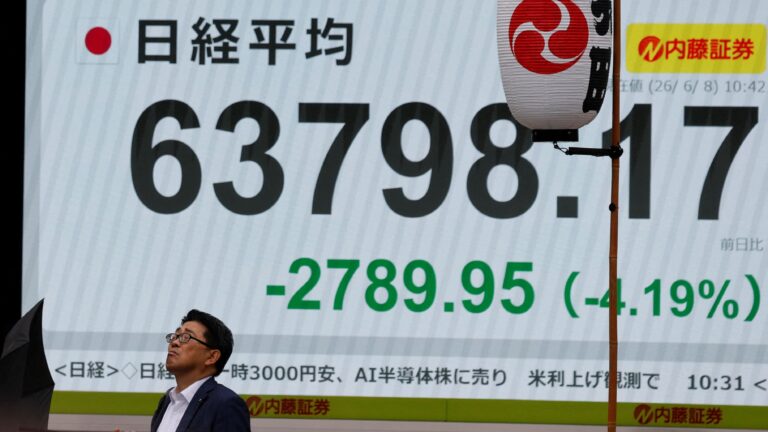
The renewed escalation in the Middle East caused stock markets to fall on Monday morning. According to Tagesschau, oil prices rose sharply in response to the latest developments in the Iran war.

The US military has attacked targets in Iran despite ongoing ceasefire negotiations. According to Tagesschau, the strikes dampened hopes for a peace agreement and drove up oil prices.

Ride-hailing giant Uber is reportedly planning to acquire Delivery Hero, sending the Berlin-based company's stock higher.

The US and Iran are moving closer to a peace agreement, according to Handelsblatt. While it remains unclear how far the path to a solution is, investors on Monday are increasingly pricing in an end to the war, driving the DAX toward a record high and sending the oil price sharply lower.

Hungary's new Prime Minister Péter Magyar is keeping the special tax on foreign retailers, the Handelsblatt reports. The EU Commission sees a violation of EU law and has filed a lawsuit.

A government coalition expert group considers Germany's kerosene supply stable despite the economic impact of the Iran war, Deutschlandfunk reports.

The official exchange rate of the US dollar in Ukraine fell to 44.23 hryvnias on May 23, 2026, while the euro dropped to 51.30 hryvnias. The downward trend continues at exchange offices and banks, according to data from Minfin and Finance.ua reported by 24tv.

Kevin Warsh was sworn in as the new chair of the US Federal Reserve on Friday. The 56-year-old takes office amid growing political tensions over the central bank's independence.

The German government wants to reduce spending on parental allowance by around 350 million euros in 2027 and 395 million euros in 2028, as reported by the FAZ. The reason is rising costs for defense, debt service, and pensions, which are shrinking other fiscal leeway.

The Bundestag approved the construction of a high-speed rail link between Dresden and Prague on Thursday evening. The project is expected to cut travel time from Berlin to Vienna to five hours, reports FAZ.

Economist Ulrike Malmendier criticizes tax giveaways like the fuel discount and explains how the government could provide more effective relief. At the same time, she warns of a further deterioration in the economic situation.

Werner Gatzer, chairman of the supervisory board of Deutsche Bahn, plans to step down in 2027. Lufthansa CEO Christoph Franz is set to succeed him, according to Handelsblatt.

The Federation of German Consumer Organisations (VZBV) is calling for a legal right to flat-rate compensation when smart meters fail to work after installation. Users could thus avoid financial disadvantages with dynamic electricity tariffs.

The Italian high-speed operator Italo, co-founded by former Ferrari CEO Luca Cordero di Montezemolo, plans to enter the German market. At the same time, Flixtrain announces a significant expansion of its services. A three-way battle on the rails is emerging, reports Spiegel.

The state of Hessen and the Technical University of Darmstadt are establishing a drone competence center at Kassel Airport in Calden. The opening is planned for 2026, as the Digital Ministry announced.

The new Postbank Housing Atlas shows how purchase prices for existing apartments will develop in all 400 German districts and cities by 2035. The study by the Hamburg Institute of International Economics (HWWI) is available to Handelsblatt in advance.

Jarek Kutylowski, CEO of Cologne-based AI startup DeepL, has been named 'Founder of the Year' at the German Startup Awards – even though the company cut around 250 jobs earlier this month.

Health insurers and the pharmaceutical industry are locked in a dispute over the pricing of biosimilars, the copycat versions of biotech drugs. At stake are billions of euros and the question of how resilient Germany's drug supply is in a crisis, the Süddeutsche Zeitung reports.

Transport Minister Patrick Schnieder (CDU) praised the service of Deutsche Bahn compared to Japan's Shinkansen trains. A FAZ author who lived in Japan for over ten years strongly disagrees and shows where the railway really lags behind.

German companies are facing growing geopolitical risks, according to a new study by the German Economic Institute (IW Cologne). Trump tariffs and the Iran war are cited as external factors, but domestic problems are also weighing on firms.

Samsung, the world's largest memory chip maker, and its union reached a tentative agreement just one hour before a planned walkout, averting a strike that could have disrupted global supply chains.

Falling oil prices gave the German stock market a boost in the afternoon, as reported by Tagesschau. At the same time, rising bond yields continue to unsettle investors.

The German chemical industry is currently benefiting from panic buying due to the Iran war, but Evonik CEO Christian Kullmann warned at the Handelsblatt annual conference in Berlin that Chinese imports will soon return with full force.

Ukrainian state-owned companies Naftogaz and Ukrzaliznytsia are making scheduled loan repayments to the European Bank for Reconstruction and Development (EBRD), according to EBRD Odile Renaud-Basso in an interview with the Kyiv Post.

More than £52 million in public funds for social housing are at risk after two investment firms of the Heylo Housing Group went into administration. As the Guardian exclusively reports, 3,500 social homes could switch to the private sector.

The EU has imposed sanctions on Chinese chipmaker Yangzhou Yangjie Electronic Technology (Yangjie), as Handelsblatt reports. This further complicates chip supply for Germany's auto industry.

Anthony Klotz, an expert on resignations, explains that many people would continue working even after winning the lottery. Resignations often stem from sudden events that shake the relationship with the job.

Stock futures remain stable as markets await upcoming earnings reports from Nvidia and retailers.