Uniper tests renovation of the Loisach-Isar Canal near Wolfratshausen

Uniper has begun a test run to renovate the Loisach-Isar Canal to prevent water leaks using bentonite.
Economic news on companies, work, consumer issues, markets and developments in Germany and Europe.
Uniper has begun a test run to renovate the Loisach-Isar Canal to prevent water leaks using bentonite.
Growing opposition to data center construction in Germany threatens billion-euro projects and puts pressure on the industry.
The UK economy unexpectedly grew by 0.3 percent in March 2026, surpassing economists' forecasts of a 0.2 percent contraction, according to The Guardian.

Users of macOS are currently receiving malware warnings for older versions of ChatGPT and Codex due to a security incident at OpenAI.
The German travel industry is facing weaker demand due to a kerosene shortage and rising inflation, as reported by Zeit.
The Federal Government has passed a reform of the heating law that delays the gradual replacement of oil and gas boilers, allowing homeowners more choice.
The travel company Tui reports a change in travel behavior due to the Iran war, with many vacationers booking last minute and favoring destinations in the western Mediterranean.

Siemens experienced an 8 percent drop in profits in the second quarter, yet maintained stable revenue and increased order intake.

Deutsche Bahn and Google have announced a partnership that simplifies ticket purchasing for regional trains and S-Bahn services. Starting now, passengers can buy their tickets directly through Google Maps.
The Dussmann Group increased its revenue by 3.8 percent to 3.4 billion euros in 2025, showcasing its resilience in challenging times.
Federal Health Minister Nina Warken defended her planned savings to relieve statutory health insurance on Tuesday in Hanover, calling the measures a necessary burden to prevent system collapse.
The non-food discount retailer Mäc Geiz has filed for insolvency under self-administration at the Halle (Saale) District Court.

Drivers in North Rhine-Westphalia experienced a surprising drop in diesel prices, which, however, was short-lived.
The Federal Financial Supervisory Authority (Bafin) highlights increased risks associated with real estate loans and growing cyber threats to consumers and banks.
German gas storage facilities are unusually low at the start of summer. The Initiative Energy Storage (Ines) warns of potential gas shortages in winter 2026/27 if temperatures drop similarly to 2010.

Oil prices are rising in Asia due to dwindling hopes for de-escalation in the Iran conflict, while chip stocks come under pressure after a decline in the South Korean market.

Klaus Reinhardt, President of the German Medical Association, is calling for a postponement of the savings package aimed at stabilizing statutory health insurance before the parliamentary summer break.

Australian Jim Chalmers will deliver the budget speech for 2026 this evening, with the budget influenced by the conflict in the Middle East, according to The Guardian.

An increasing number of academics are searching for jobs, even though well-trained professionals are urgently needed. According to Tagesschau, the requirements for applicants have risen significantly due to the influence of artificial intelligence.

According to the ifo Institute for Economic Research, every twelfth German company is at risk of extinction, with the retail sector particularly affected.
Uncertainty in the Middle East is putting pressure on the DAX, which falls by 0.3 percent to 24,274 points in early trading. U.S. Donald Trump has rejected an Iranian proposal for peace talks as unacceptable, causing investor nerves.
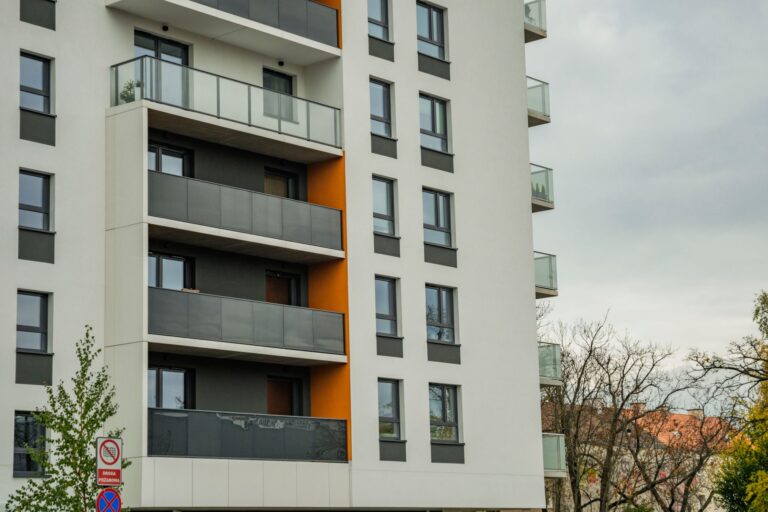
According to a recent coastal report by Von Poll Immobilien AG, property ownership on Sylt remains a luxury. In the first quarter of 2023, the average price per square meter on the island was 12,557 euros.

Several major deals and allegations are drawing attention in the biotech and tech sectors: Bayer is acquiring eye specialist Perfuse Therapeutics, Curevac’s founder accuses Biontech of misleading behavior after acquiring Curevac, and Gamestop has tabled a roughly $56 billion takeover offer for eBay. The moves could reshape business lines, trigger legal and employment consequences, and unsettle markets.

BMW reported a roughly 23 percent decline in first‑quarter profit, weighed down by new tariffs, falling revenues and weaker deliveries—particularly in China, even as demand in Europe rose.