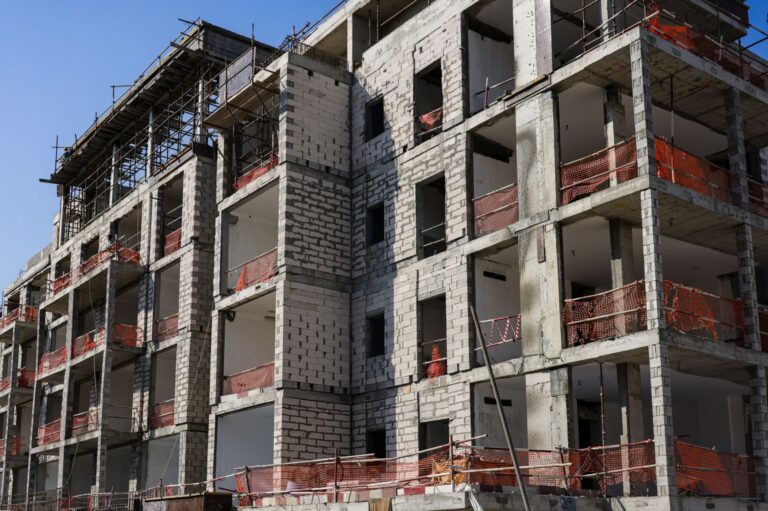
Stand: 26 October 2026. Justice Minister Stefanie Hubig and Building Minister Verena Hubertz (both SPD) have presented their draft law on “Gebäudetyp E” – the “simple building type” meant to make construction in Germany cheaper. The ministries expect savings of 10 to 15 per cent on building costs, based on evaluations of pilot projects. According to dpa, though, the draft has not yet been agreed within the federal government; the Länder and industry bodies can now comment. The law could take effect in mid-2027 at the earliest.
Earlier coverage: on 16 October we explained why the plan was stuck in government. The dispute centred on liability and consumer protection; the details published so far do not show whether it has been settled.
The core of the reform is legal rather than technical. Under current German contract law, builders must meet the “generally accepted rules of technology”, in practice mostly DIN standards. Departing from them – on sound insulation or fittings, say – risks a claim of defect even if client and contractor both wanted the change. So planners play safe, and expensive. The draft amends construction contract law: if every party agrees, they may deviate from standards that are not legally mandatory. Without such an agreement, nothing changes. dpa lists thinner ceilings, fewer sockets, lower ceiling heights and no towel radiator as examples. Fire protection, structural safety, ventilation and daylight remain compulsory.
Hubertz said: “Every euro we do not put into superfluous standards is a euro for more affordable housing.” Hubig says the aim is legal certainty for both sides of the contract.
How much would it really save?
The 10 to 15 per cent figure is a ministry estimate, not a market result. Industry associations had previously spoken of up to 25 per cent against current costs of roughly €4,500 per square metre – their own numbers, not an independent forecast. On a €250,000 house, 10 to 15 per cent would be €25,000 to €37,500. Whether buyers or tenants see any of it depends on developers passing savings on, which the law does not require. Land prices, interest rates and planning delays are untouched. dpa reports that construction interest rates and material costs are rising again, while permits are up: 169,400 homes were approved from January to August, a little over 12 per cent more than a year earlier. Several hundred thousand homes are still missing.
Property industry groups welcomed the November 2025 outline. Dirk Salewski, president of the BFW federation, called it “E, wie endlich” (“E for finally”); legal expert Michael Halstenberg saw “remarkable progress” but flagged open questions about scope and interpretation of the new terms. In Bavaria, the state chamber of architects has been testing the concept in pilot projects since December 2023.
Our assessment: buyers will have to read contracts more closely. Anyone accepting less comfort must be able to see clearly what has been dropped, otherwise the dispute simply moves from the building site into the small print. The transparency question is likely to dominate the legislative debate. For tenants nothing changes for now: minimum housing standards stay, and no new building will be completed under the new rules before 2027.
Sources: dpa, dpa/Das Gelbe Blatt, Handelsblatt, BFW, Bavarian Chamber of Architects