Strong winds caused a widespread power outage in Freiburg and the Dreisamtal on Sunday morning – as a result, the university hospital was temporarily unable to treat all emergencies in its emergency department. As the hospital announced on Instagram, only life-threatening emergencies should now come to Freiburg, while other patients should go to nearby emergency departments and emergency practices, reports the Tagesspiegel, citing the Deutsche Presse-Agentur.
According to the police, several thousand households were temporarily without power on Sunday, 25 October. By the morning, most of them had their supply back. According to the police, the cause of the outage was a sheet-metal roof that flew into a substation in the Freiburg district of Littenweiler in the morning because of the strong winds and caused a short circuit there.
Oberried still without power
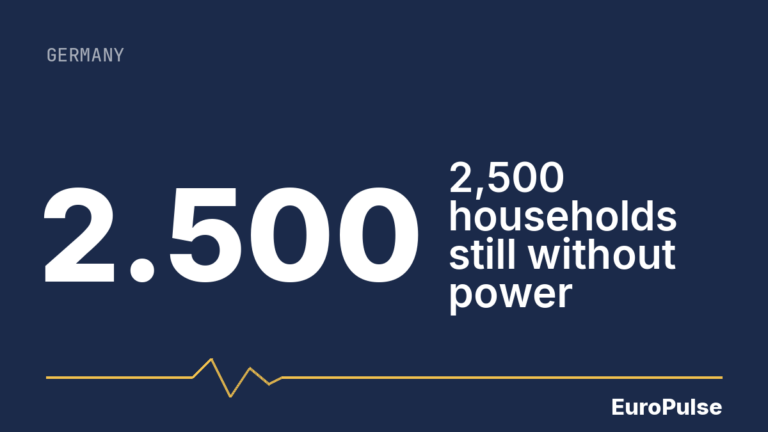
A spokesperson for the energy supplier Badenova told the news agency dpa that most households in Freiburg and the surrounding area were now back on the grid. Only in Oberried, a small municipality south-east of Freiburg, was the power still out. Technicians were working to restore supply to the good 2,500 households there as well, reports the Süddeutsche Zeitung.
A severe weather warning has been in force for parts of the Black Forest since the night. Experts at the German Weather Service (DWD) expect, among other things, hurricane-force gusts of up to 120 kilometres per hour and heavy rainfall of up to 80 litres per square metre.
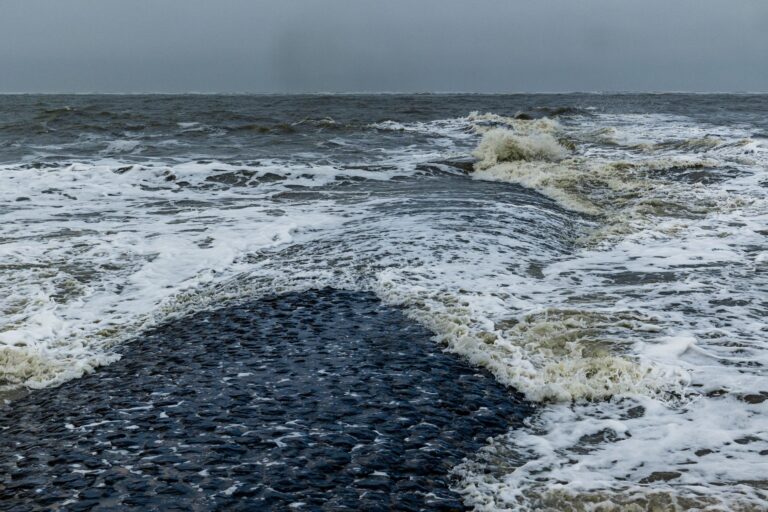
Storm surge warning for the North Sea coast
The situation in the north remains much calmer, but not without danger. The Federal Maritime and Hydrographic Agency (BSH) warns of a storm surge on the German North Sea coast. In the night to Monday, high water on the East Frisian coast and in the Elbe area will be 1.5 to 2 metres higher than the mean high water, in the Weser area about 1.5 metres and on the North Frisian coast 2 to 2.5 metres. In Hamburg, the level at St. Pauli is expected to rise to 2 metres above mean high water around 4.00 a.m. on Monday. From a height of 1.5 metres, it is called a storm surge; the lower-lying part of the St. Pauli fish market is then flooded by the Elbe.
Already in the night to Sunday, storm depression “Manja” had made it stormy in parts of Germany. On the Brocken in the Harz, hurricane-force gusts of up to 111 kilometres per hour were measured, and in North Rhine-Westphalia storm gusts reached around 90 kilometres per hour. In Gelsenkirchen, large polystyrene panels came loose from the roof of a house in the city centre on Saturday evening; the police cordoned off part of Bahnhofstraße until the morning, and the fire brigade and THW recovered the panels for hours with a crane truck. According to WDR, several railway lines were still affected by uprooted trees even after “Manja”, although some of this damage dated from the previous day.
In the Harz, the control centre reported a total of 28 operations since Saturday morning because of uprooted trees and falling branches. Cars and a house were damaged, but no one was injured. In Hesse, the police reported only minor property damage after a night that was in parts stormy and rainy.
Editor’s note: For Freiburg and the surrounding area, the acute situation is largely relaxed according to the authorities, and only the supply in Oberried is still open. On the North Sea coast, by contrast, the peak water levels are not expected until the night to Monday.