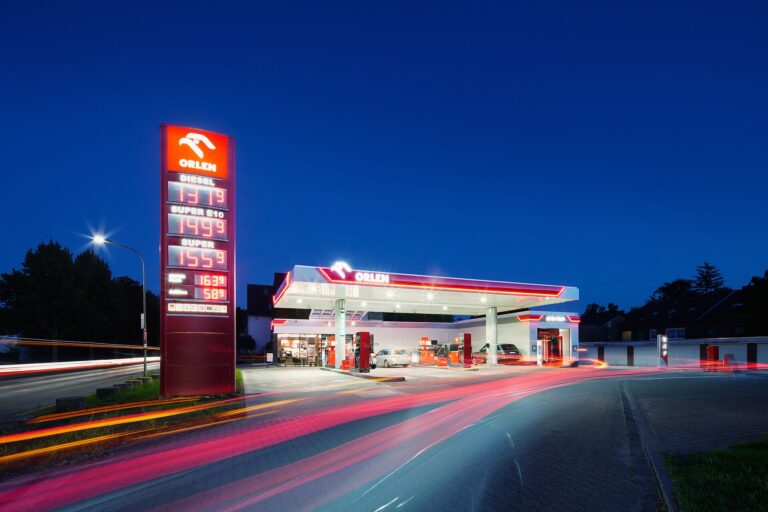
Drivers in Germany currently save about 17 cents a litre at the pump. That discount is set by law to end on 31 December 2026, and nobody has yet said what replaces it. On Thursday the state premiers meeting in Berlin demanded that Berlin settle the question now.
The Länder called for a prompt federal proposal on the announced fuel price cap. Co-chair Olaf Lies (SPD) said the federal government need not wait for the new year and should act “so that it is certain how things continue after 1 January 2027”. In September Berlin said it would hold talks with the oil industry, aiming for a temporary cap on the Luxembourg or Belgian model by 1 January at the latest. Nothing has been decided: neither the level nor the duration is known.
What the discount costs and what reaches drivers
The energy tax on petrol and diesel falls by 14.04 cents a litre, or just over 17 cents once VAT is included. According to the Bundestag finance committee, the state forgoes about €2.5bn in energy tax and €293m in VAT. For a 50-litre tank that is at most €8.50.
How much reaches the pump is disputed. The ifo Institute measured average pass-through of about 15 cents for diesel and E10, and a little over 16 cents for Super E5, in the first five days of October. It dipped at the weekend, by around seven cents for E10. The industry body en2x rejects ifo’s account and says prices would have been higher without the measure. In the first round, in May and June, petrol pass-through was close to full, but for diesel only about 73 per cent according to ifo. Monika Schnitzer, one of Germany’s five economic advisers, calls the discount “expensive” because it also helps people who do not need help, and wants direct payments to low- and middle-income households instead.
Three paths after 31 December
First: the discount lapses and no cap arrives. Fuel would then rise by roughly 17 cents at the turn of the year, provided oil prices hold. Second: Berlin adopts a cap, whose effect depends on its level and on who covers the difference. Third: the discount is extended, which would cost billions again while Finance Minister Lars Klingbeil (SPD) is already pointing to a lack of fiscal room on electricity tax.
Our assessment, with moderate confidence: a stop-gap is most likely just before Christmas, since no party wants to be blamed for a price jump on 1 January. Whether it takes the form of a cap or a longer discount depends less on the Länder than on the federal budget.
For motorists, the practical point is to watch the government’s decision over the coming weeks. We reported earlier on the Länder’s demand for an electricity tax cut for all.
Sources: ifo Institute, Bundestag, dpa-AFX, VerkehrsRundschau, Heidelberg24