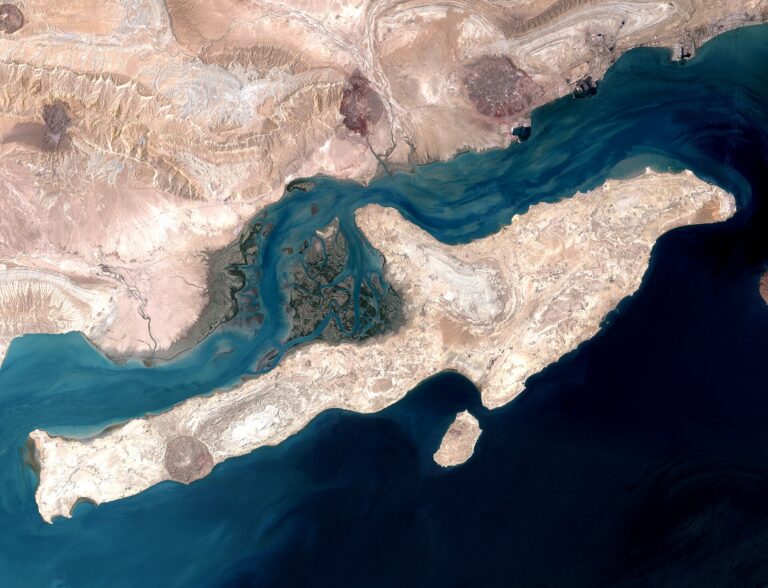
According to a US media report, the US attacked Iran’s Qeshm island in the Strait of Hormuz one day before the midterms. The Wall Street Journal reported, citing unnamed US government officials, that the attack on Monday on the largest island in the strait had been preceded by several limited attacks that Washington had secretly carried out against Iran in recent weeks. The news agency AP also reported, likewise citing a US government official; according to dpa, the broadcasters CNN and CBS also reported on the “limited” attacks.
Iran’s state news agency Irna reported that five explosions were heard in quick succession on the island. Some residents also reported seeing two aircraft in the sky. Iranian state television also spoke of explosions on Qeshm. Asked about the reported attacks, the US Department of Defense referred to the responsible US command Centcom, which initially did not respond to a request from the news agency AFP late on Monday.
US President Donald Trump had previously said he did not want to order attacks before the midterms and had signalled diplomatic progress with Tehran. According to the Wall Street Journal, the US has already been carrying out attacks on a smaller scale against Iran for several weeks. Some government officials described the actions as defensive, according to the report; they were intended to prevent Iran from continuing to attack merchant ships in the Strait of Hormuz unhindered. Smaller-scale military strikes were deliberately kept secret in order not to signal an intention to resume a larger military operation against Iran.
Qeshm lies in the Strait of Hormuz, which is at the centre of the conflict between the US and Iran and is enormously important for the global trade in oil and gas. Since the start of the Iran war at the end of February, Tehran has largely blocked the strait and regularly attacks ships there. In response, the US imposed a naval blockade on Iranian ports.
On the eve of the elections, Trump and Vice President JD Vance expressed optimism that a peace agreement could soon be reached after more than eight months of war with Iran. “It could happen!”, Trump wrote on his online service Truth Social, stating that oil prices were falling “like a rock”. Oil prices, which had soared due to Iran’s de facto blockade of the Strait of Hormuz, plunged by more than seven per cent on Monday. The reason was optimism about a possible end to the conflict. The unpopular Iran war and its consequences for petrol prices and other economic sectors are seen as a weak point for the Republicans in their efforts to defend their majorities in Congress.