The German government wants to stop Berlin from taking large landlords’ flats into public ownership, and it has now spelled out how. According to an Interior Ministry spokesperson, whose account became public on Monday, Interior Minister Alexander Dobrindt’s (CSU) draft “investment protection act” sets three hurdles: compensation only at full market value, only in cash, and only if socialisation is “absolutely necessary”.
The key points go back to a coalition committee decision of 2 July and leaked on Sunday. There is no bill yet; it is being coordinated between the Interior Ministry and the justice and building ministries, both led by the SPD.
Why the three hurdles would be so expensive
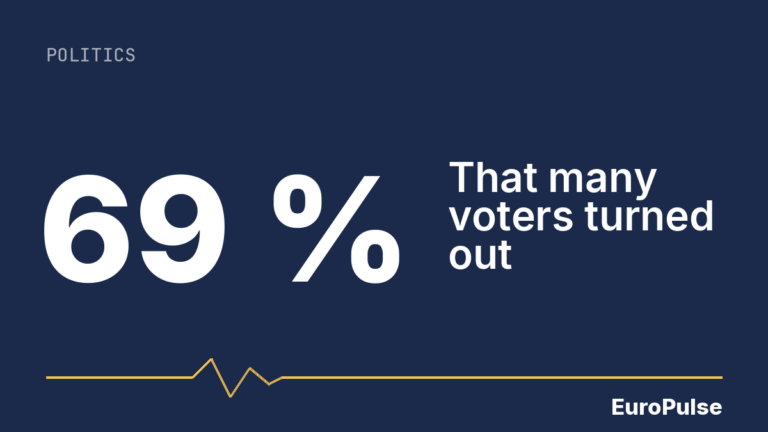
The backdrop is a paper presented on 17 October by Berlin’s Left Party, Greens and SPD after exploratory talks. Companies with more than 10,000 flats in the capital would have to give up part of their holdings and could keep 10,000. Estimates put the number of affected flats at 140,000 to 160,000, including Vonovia’s. Compensation would be capped at €16 billion, well below market value. A financing plan is due in 2027, a draft law in mid-2028. In 2021, 59.1 per cent of Berliners had already voted in a referendum to expropriate big landlords.
Dobrindt’s rules would upend that calculation. Market value instead of a discount, cash instead of long-term bonds: Tagesspiegel cites experts who say the bill could triple, and paying in cash would collide with the debt brake. Proving that subsidies and new building are not enough would also be hard after years of missed construction targets.
Günter Krings, deputy leader of the CDU/CSU parliamentary group, called the proposals “reasonable and fair”. Elif Eralp, Left leader in Berlin’s state parliament, said: “I clearly assume that this is unconstitutional.” Left MP Caren Lay called it a legal “suicide mission”. The tone inside the SPD is striking: Berlin lead candidate Steffen Krach accused the conservatives of “glaring aimlessness”, according to Süddeutsche Zeitung, while the federal SPD has helped shape the key points through its ministries.
What Karlsruhe would have to decide
Article 15 of the Basic Law allows land, natural resources and means of production to be transferred into common ownership against compensation. It has never been used since 1949. The text does not say how high compensation must be; a market-value requirement is not in it.
Competence is shared between the federation and the states. Berlin may act as long as the federation has not, and the federation may step in only to secure equivalent living conditions or legal and economic unity. Jena constitutional lawyer Timo Laven told ZDF this could “probably be answered differently”, but that in practice the act would amount to a block on Berlin. Quentin Herbster, writing in Verfassungsblog, calls it a “mere prevention law” that would be unconstitutional. Constitutional scholar Ulrich Battis, by contrast, finds cash payment and the necessity test “quite feasible”, but a strict market-value rule risky. Justice Minister Stefanie Hubig (SPD) said as early as the summer that a blanket ban was “certainly not possible” (earlier coverage).
Our assessment: the dispute is likely to end up at the Federal Constitutional Court, probably not before 2028. Until then a federal law would apply, because it blocks state law until it is struck down. For tenants of large landlords that means rent cuts through socialisation look unlikely any time soon. That is not certain: it depends on whether the coalition softens the market-value clause. How the financial sector sees the issue is here.
Sources: ZDFheute, Tagesspiegel, Verfassungsblog, dpa/Volksstimme, Basic Law, Art. 15